
Alix Anne Shaw: The Matter of Immortality
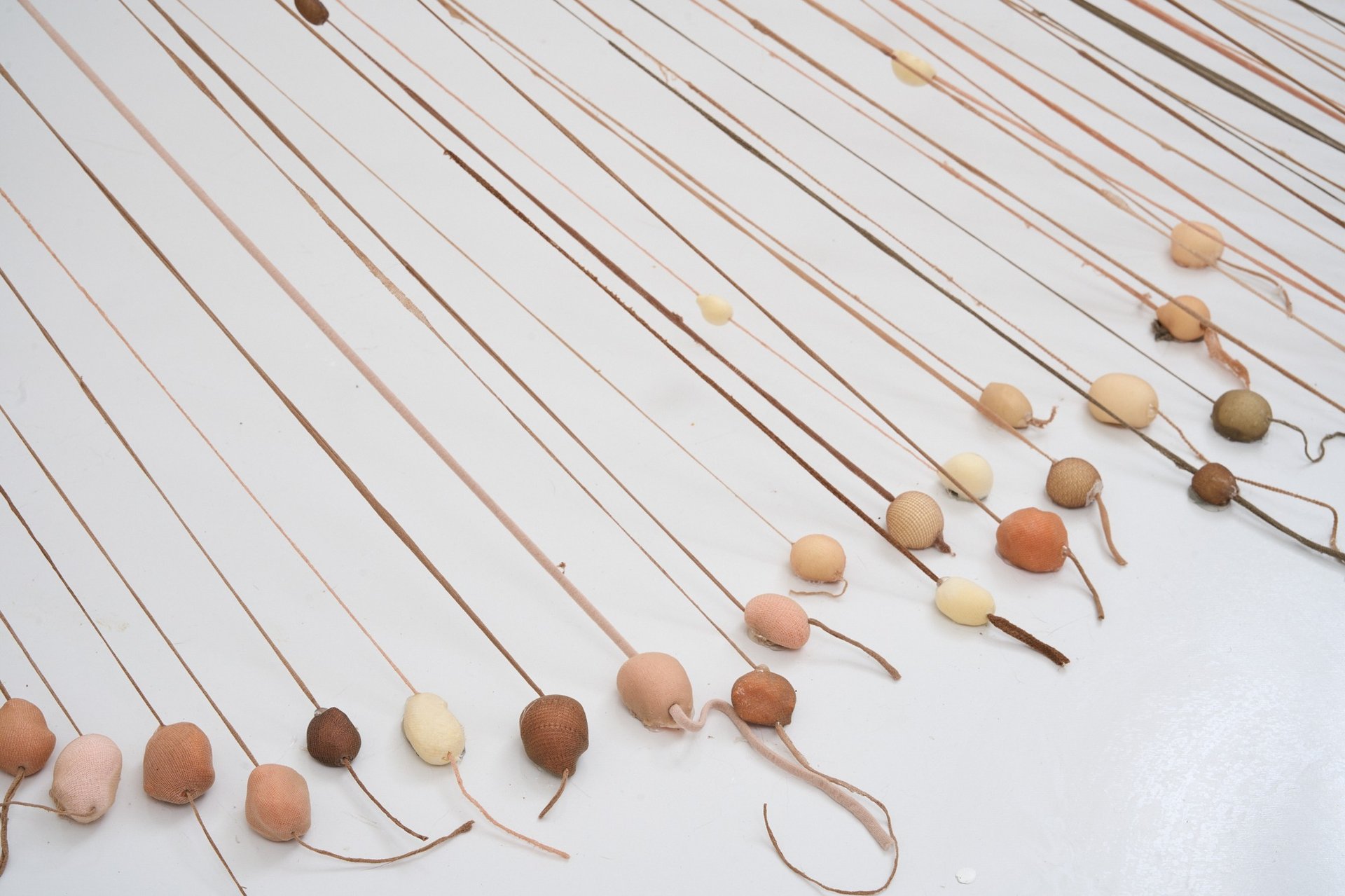
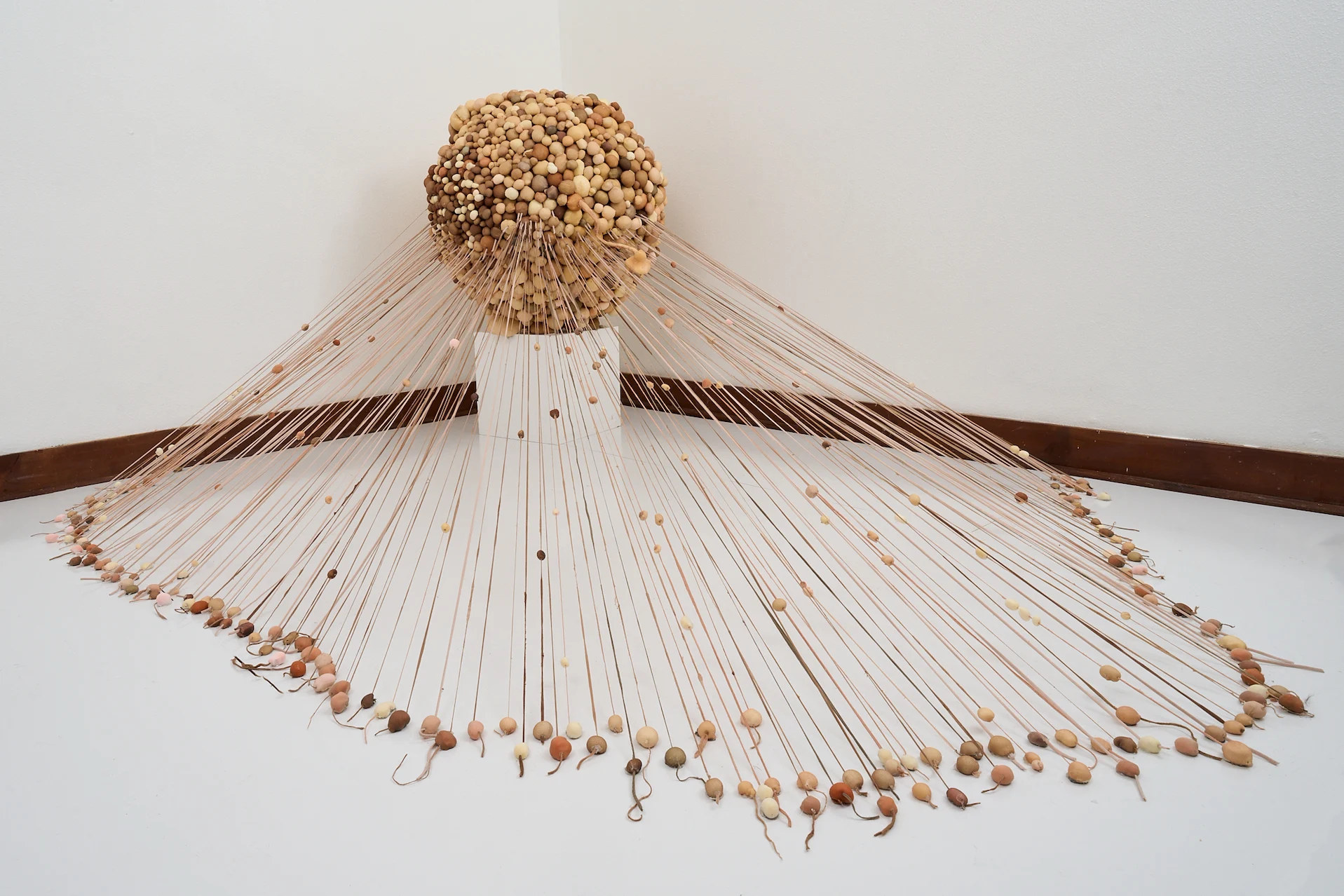
Alix Anne Shaw’s Immortality (on view at Art City March 13 - April 4, 2026) models an endlessly reproducing cancer cell, referencing the HeLa cell line taken in 1951 from Henrietta Lacks without her knowledge or consent. Upon collection, doctors discovered that the cells could survive and multiply outside the body. These “immortal” cells became foundational to modern medical research, despite Lacks never knowing of her cells’ impact.
Immortality pays homage to Lacks while simultaneously confronting our history of exploitation in medical research and examining the meaning of immortality.
Here, the artist discusses the exhibition’s central themes and zir hopes for what viewers will gain from the installation.
NEW GALLERY: Let’s begin with a description of your practice. Where have you been? How has it progressed? And where are you now?
ALIX ANNE SHAW: I started my creative life as a poet. I really have two artistic careers: one is poetry and one is visual art and sculpture.
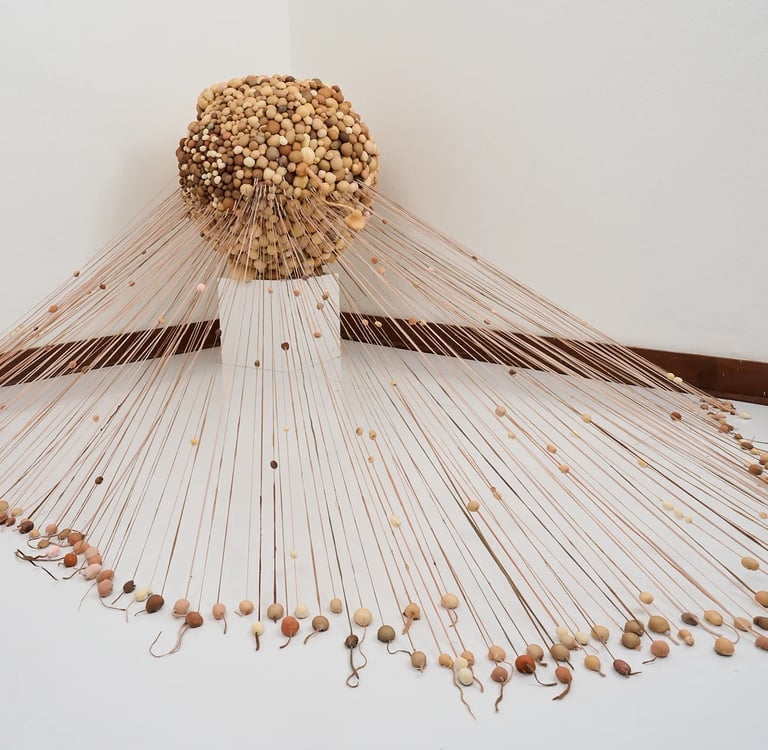
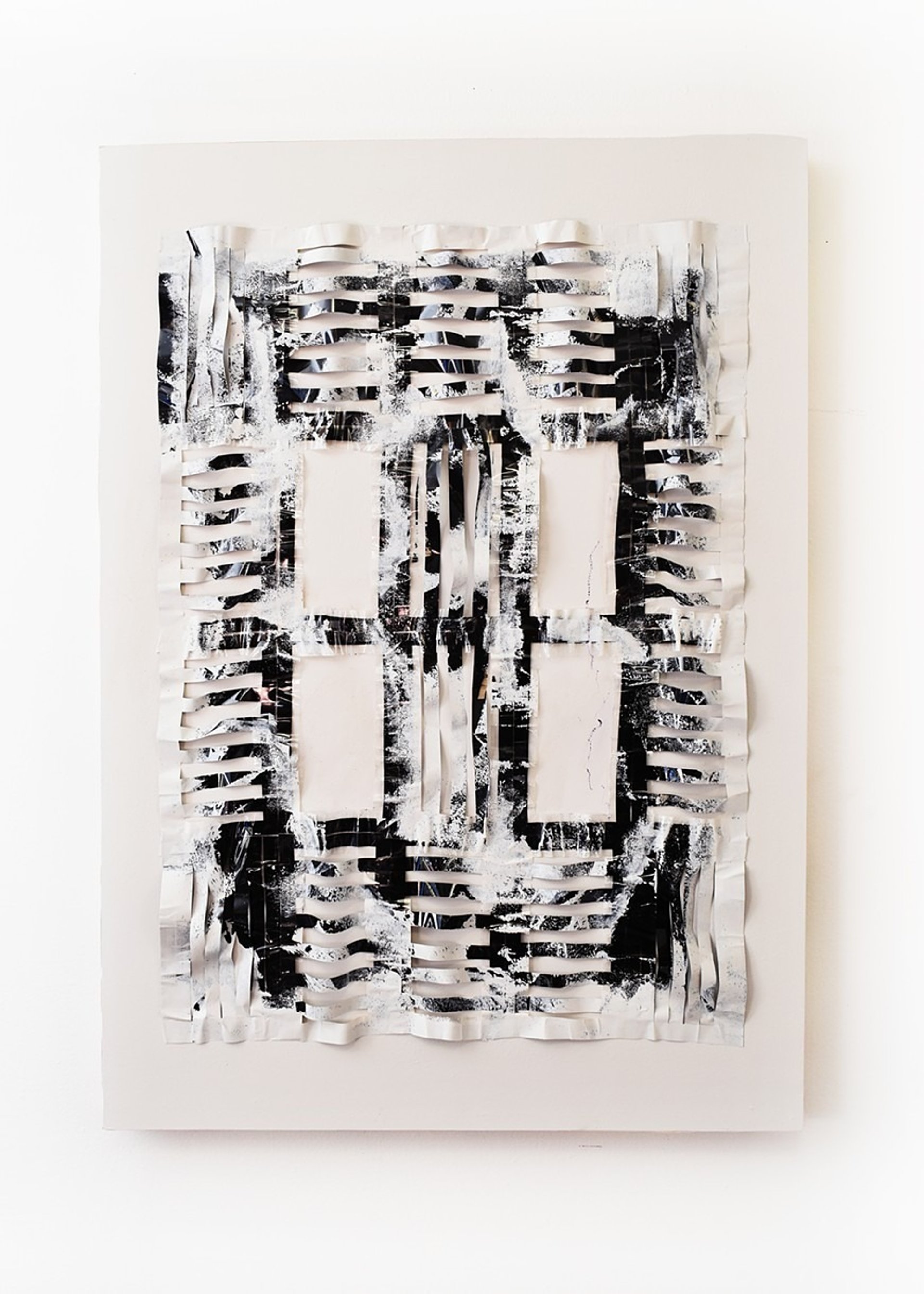
In my sculpture, I'm really interested in investigating materiality. I have materials that I particularly like, but I don't specialize in a particular process or material. I try to let the project drive the material choices based on what would be most appropriate for what I want to do. I think not only about their physical properties but also about what the materials communicate. In the case of Immortality, the material choices were very deliberate—the piece is about racism and cervical cancer, so it is made using “flesh hued” women’s panty hose.
My work often addresses social and environmental problems, but the aim of the work is not to be didactic or tell people what to think. The goal is to raise questions. In the case of Immortality, yes it's about Henrietta Lacks and her story, but it also questions the idea of immortality. The cell line taken from her body is called immortal, which is not really true, because the cells themselves do in fact self-destruct. The sculpture is rendered from a picture of a cell that's in the midst of its own destruction. So, this work centers around a larger set of questions about what it means for something to be immortal.
NG: How did you come to Henrietta Lacks’ story in particular for the Immortality piece?
AAS: When I was in graduate school, in about 2012, I was diagnosed with Crohn's disease. There are a lot of terrifying possible complications, one of them being colon cancer. I was afraid to read too much about what might happen to me, so I started working on this piece that lived up in a corner of my studio. It was made to represent metastasizing cancer cells. I would add to it once in a while and it became this thing growing there behind me subtly in the background.
Then at some point I googled colon cancer cells and saw beautiful photos of HeLa cells. I became fascinated by them, particularly by one of a cell exploding out. I immediately wanted to make a room-sized replica, but I was scared to work on it. It was this very long, painstaking process of building and building and building and building and building this thing. And the whole time, I’m thinking, “Am I somehow invoking cancer for myself by making this?”
NG: While you explicitly don’t want to prescribe a right or wrong answer through your artwork, is there something you hope someone might gain, consider, or experience when interacting with the Immortality exhibition?
AAS: Yes, definitely. I hope it raises questions about what it means to be immortal, whether you're thinking about that in terms of a cell line or a human being or a social issue. What is immortality, really? Is it desirable? And what does it mean for us to even want that? Do we want that?
I hope that the visual interaction viewers have with the object and its materials give them a feeling, whether it be awe, fear, or disgust. It's meant to come towards you and at you. You could see that as a welcoming outreach or as a menacing approach. So, I hope that viewers have an emotional experience with it while also considering questions that aren't easily answered. Those questions have to do not only with biological immortality but also about the self-replicating nature of American racism. We are not a post-racist society. I’d like viewers to think about the malignancy of racism and other forms of social inequality in our current historical moment.
NG: This question of immortality and society makes me think about our collective insistence for and reliance on mass production. All of our plastic is going nowhere—talk about immortality. In your work investigating environmental issues, is this something that has come up?
AAS: Yes, actually. In addition to Immortality, I've been working on a series of pieces called Future Archaeologies. I collect pieces of refuse, trash, or strangely shaped plastic objects and sculpt them into what I imagine is a future archeological dig. Objects are in various forms of identifiable and abstracted shapes, emerging from the sculptures. I want us to envision what might be left behind as our geologic legacy.
NG: Interesting! All the questioning of immortal materials, memories, and life reminds me of conversations I’ve had with friends lately about this kind of technocratic state that some people seem to long for, particularly via the idea of living forever in the digital realm, and with humor we keep saying “These tech bros really should’ve read Tuck Everlasting in middle school with us girls!”
AAS: Ha! I just recommended that book to a young person I met. It makes a big impact. We could all follow Kurt Vonnegut’s suggestion to “catch people before they become generals and senators and presidents, and… poison their minds with humanity.” I hope that in some small way my work also does that.
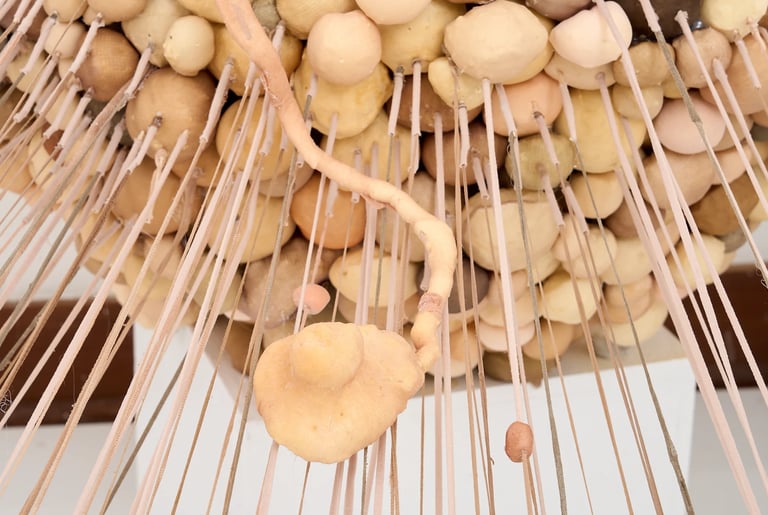

"I hope [the sculpture] raises questions about what it means to be immortal... What is immortality, really? Is it desirable? And what does it mean for us to even want that? Do we want that?


Alix Anne Shaw is a Milwaukee-based artist and poet. Zir work has been exhibited at galleries including the Richard Gray Gallery in Chicago, the Museum of Wisconsin Art, Kriti Gallery in India, and the Czong Institute for Contemporary Art in South Korea. Ze lives online at https://alixanneshaw.carbonmade.com.


Artist Conversation
Rebecca Griffith: Obsolete Objects and Lasting Memories
© 2026. All rights reserved.



Viewing Hours by Appointment Only
Open First Friday of each month
(312) 690-9634
2623 W Chicago Ave, Chicago, IL
Viewing Hours by Appointment Only
Open Fridays 5-8pm
info@artcitychi.com
(312) 690-9634
1400 N Halsted St, Chicago, IL