Nehir Uslu: Art To Feel, Care, and Be Held
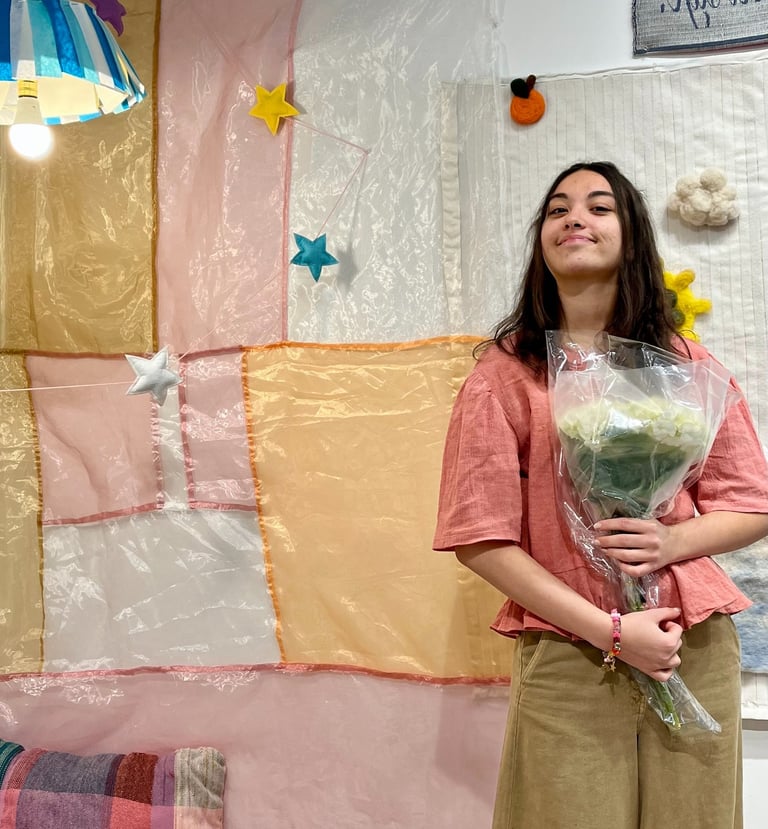
Turkey-born and raised, Chicago-based artist and mental health advocate Nehir Uslu creates interactive, mixed media installations and illustrated mental health resources on Instagram. Working primarily with fiber, weaving, and soft sculpture, her practice explores how texture, touch, and material engagement can support care, grounding, and emotional presence.
Like a hug from someone you’ve longed to see, Uslu’s February 2026 exhibitionHolding Space beckons visitors into its soft warmth. Here, we discuss the exhibition, Uslu’s creative practice, and the ever-valuable role art plays in society.
NEW GALLERY: I’d love to start by having you describe your current artistic practice. What themes and visual icons do you explore in your work?
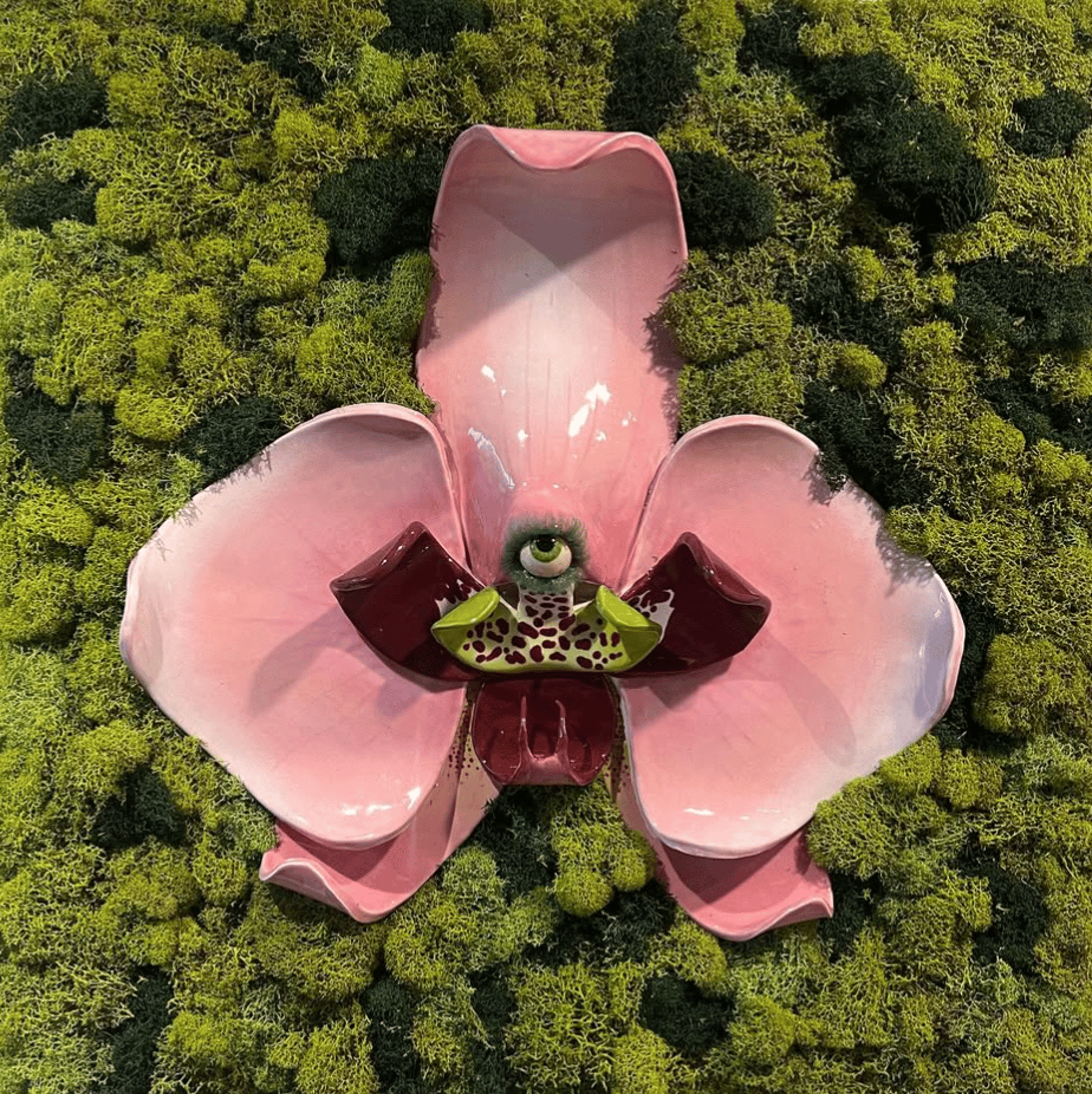
NEHIR USLU: My current practice centers on fiber, soft sculpture, weaving, ceramics, and illustration, with a strong emphasis on touch and sensory engagement. I am deeply interested in how softness can hold complex emotions, such as grief, loss, and anxiety without attempting to “fix” them.
Visually, I return to icons associated with comfort, home, and familiarity. These elements reference domestic and therapeutic spaces, but are intentionally placed within formal exhibition contexts to challenge expectations of how and where care exists.
I often work from the guiding question: How can I create conditions where people feel safe enough to slow down and notice how they feel?
NG: Where will these ideas be present in Holding Space? What can audiences expect to see and feel when viewing the show?
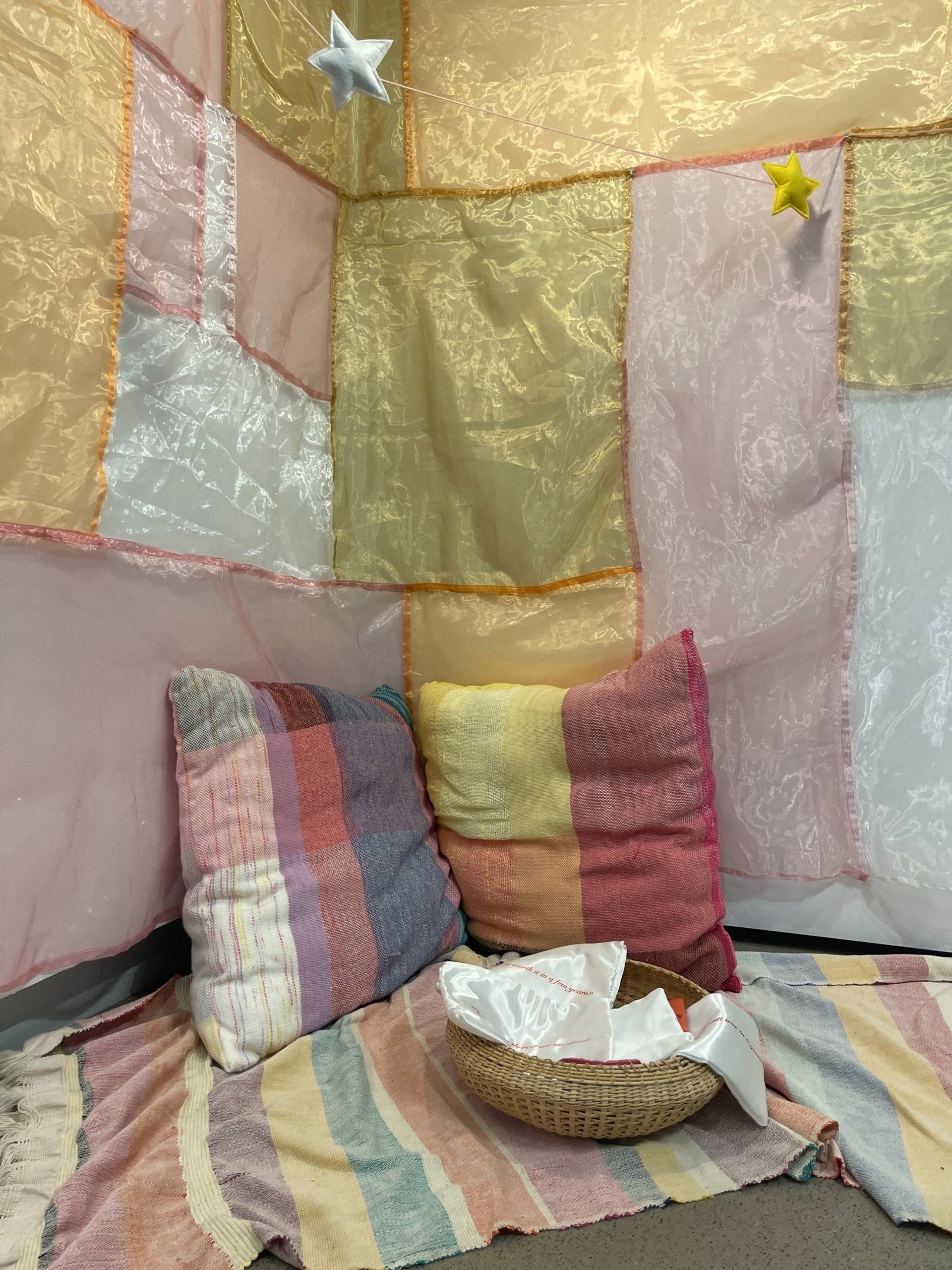
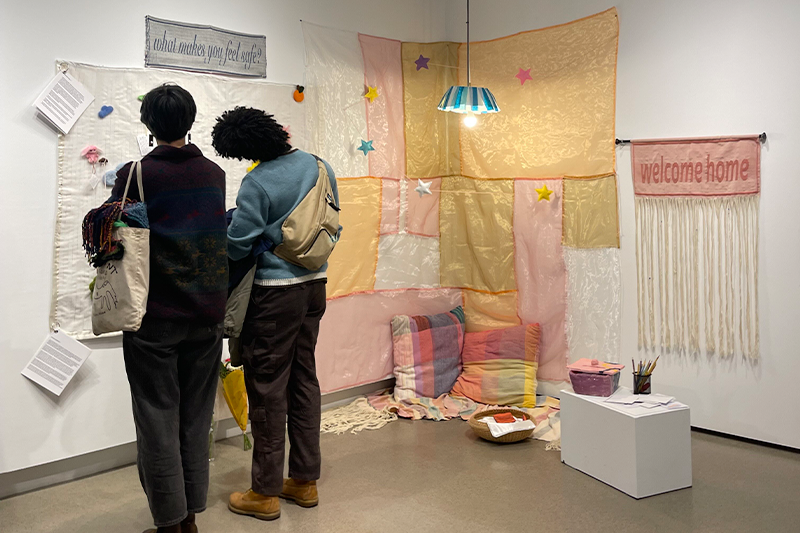
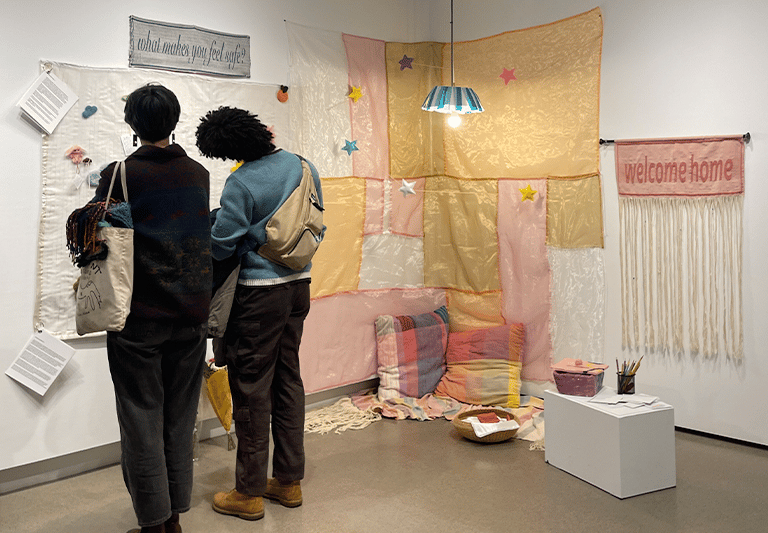
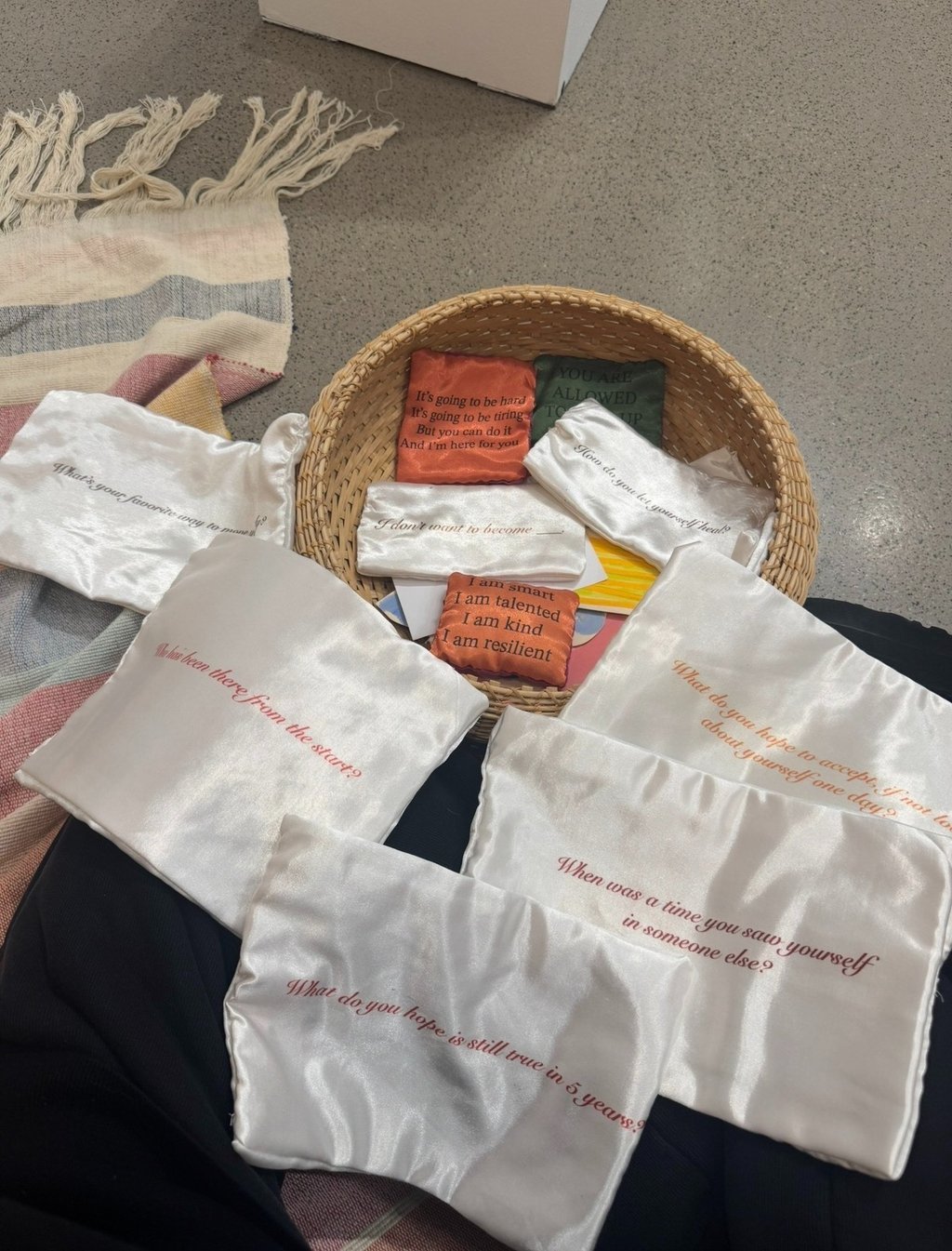
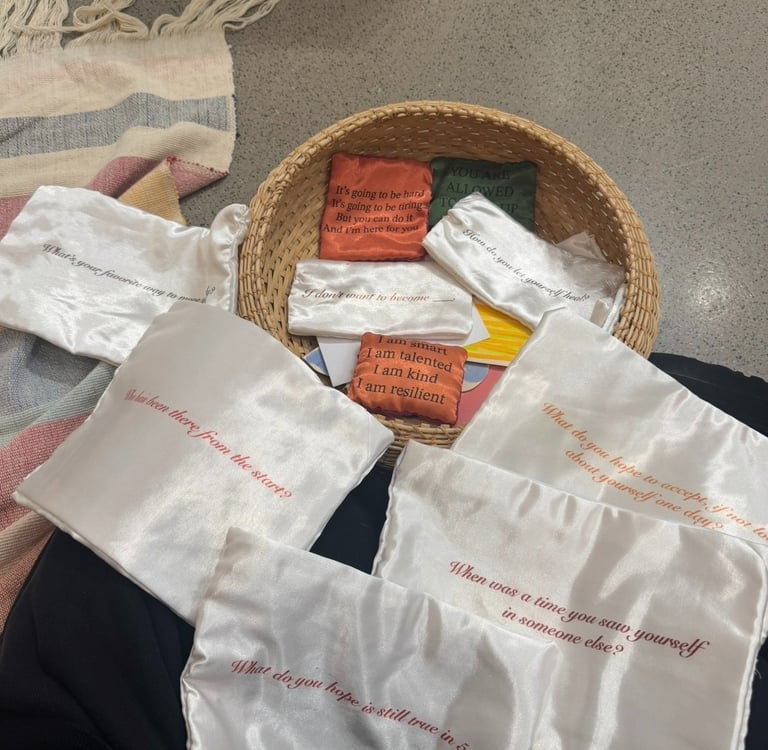
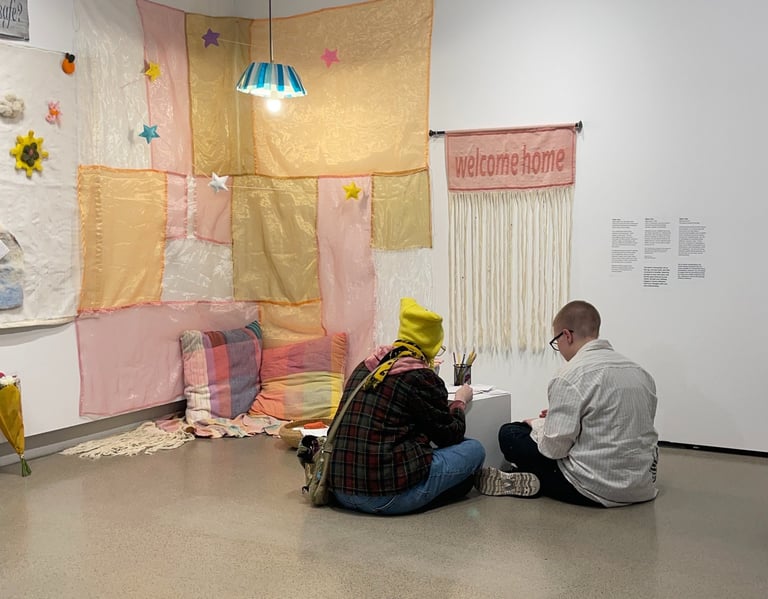
NU: Holding Space will present interactive fiber works, soft objects, weavings, and open-ended journaling prompts that invite visitors to engage in reflection. The exhibition is designed less as something to move through quickly and more as something to inhabit. Through tactile surfaces and opportunities for engagement, the show will frame fibers not only as a medium of comfort, but also as a tool that can support grounding and healing.
Ideally, participants leave with a felt experience rather than a visual takeaway; a sense of being held, a moment of emotional clarity and peace, or the permission to slow down and take up space without justification.
NG: A significant number of artists that have recently shown in our galleries have been exploring themes of domesticity and private life in their work. Do you think there is something distinctive about our current cultural moment that is prompting investigations into what “home” means?
NU: I believe we are living in a moment where many people feel overstimulated and disconnected—from their bodies, from one another, and from any consistent sense of safety. Between ongoing political tension and the lasting effects of collective trauma, the idea of “home” shifts. It is no longer just a physical place, but something people are actively searching for. There is a shared longing and yearning for environments that allow us to be unapologetically human, where complexity, vulnerability, and contradiction are not only allowed but held with care. In this sense, “home” becomes less about architecture and more about permission: the permission to rest, to feel, to soften, to be vulnerable, and to show up as we are.
There is also a quiet sense of grief embedded in this search of belonging, for the safety that once felt assumed, for versions of home that no longer exist, or for spaces we may never have fully had. The grief sits alongside longing. It reflects a collective awareness that many people are still learning how to create conditions for rest, belonging, and care in a world that often makes those things out of reach.
My work responds to this grief and longing by creating symbolic homes. These environments are not meant to replace real homes, but to act as a physical reminder: that care is possible, connection exists, healing is not out of reach, and that alternate realities and ways of living can be imagined.
NG: Do you intentionally pair themes that are often seen as dark or challenging with playful colors and approachable iconography to highlight life’s contradictions?
NU: Yes, very intentionally. I acknowledge and embrace the idea that emotions coexist, because that is simply part of being human. We are capable of holding multiple, even contradictory, feelings at the same time. I want to affirm that it is okay to feel joy alongside grief, comfort alongside discomfort, or softness alongside heaviness.
Talking about mental health can feel intimidating and many people avoid engaging with it because of stigma. The bright colors and visual softness in my work act as an entry point, lowering the barrier to engagement and making the work feel accessible. Often, people approach the works without realizing they are entering a space for reflection. They pick up a prompt from the basket, begin reading, and slowly start thinking and journaling.
That moment of unintentional introspection matters to me. The work does not demand vulnerability, but it gently encourages inward reflection. If someone pauses to reflect, even briefly, that is a win for me. I want people to leave with the understanding that their emotions are human, valid, and not something to be afraid of.
"If someone pauses to reflect, even briefly, that is a win for me. I want people to leave with the understanding that their emotions are human, valid, and not something to be afraid of."
NG: What are you most excited about for the Holding Space exhibition?
NU: I’m most excited about creating a space where people feel permitted to slow down and genuinely engage, not just look and move on. This exhibition gives me the opportunity to bring together many of the ideas that shape my practice into an environment that can be inhabited, rested in, and returned to. I’m excited to see how people choose to spend time with the work, whether that means sitting quietly, interacting with the materials, or reflecting in their own way.
NG: As you may know, NEW Gallery is an artist-run nonprofit with a mission to make art education and opportunities accessible to all, regardless of background or resources. Can you tell us why you believe art is a valuable resource that should be accessible to all?
NU: Art offers access to expression, regulation, and connection in ways that do not rely on spoken language, education level, or prior knowledge. It does not require expertise or confidence to begin. In the settings where I’ve worked, I have seen people arrive feeling intimidated by art, often believing they are “not talented”. But once that pressure is removed, art becomes a way to open up without needing the right words. It allows people to communicate through touch, color, and repetition, especially when language feels inaccessible or unsafe.
I am drawn to art not as a product, but as a process that can support emotional regulation, self-trust, and inward reflection. Making art accessible means making care accessible.
Keep doing the work you do!
"Art offers access to expression, regulation, and connection in ways that do not rely on spoken language, education level, or prior knowledge… It allows people to communicate through touch, color, and repetition, especially when language feels inaccessible or unsafe."
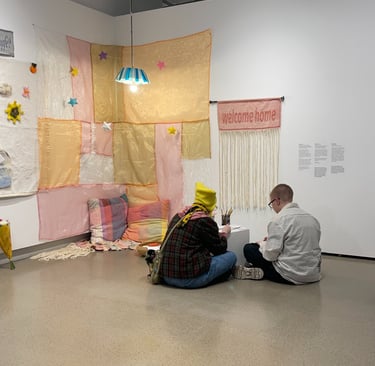
"Ideally, participants leave with a felt experience rather than a visual takeaway; a sense of being held, a moment of emotional clarity and peace, or the permission to slow down and take up space without justification."
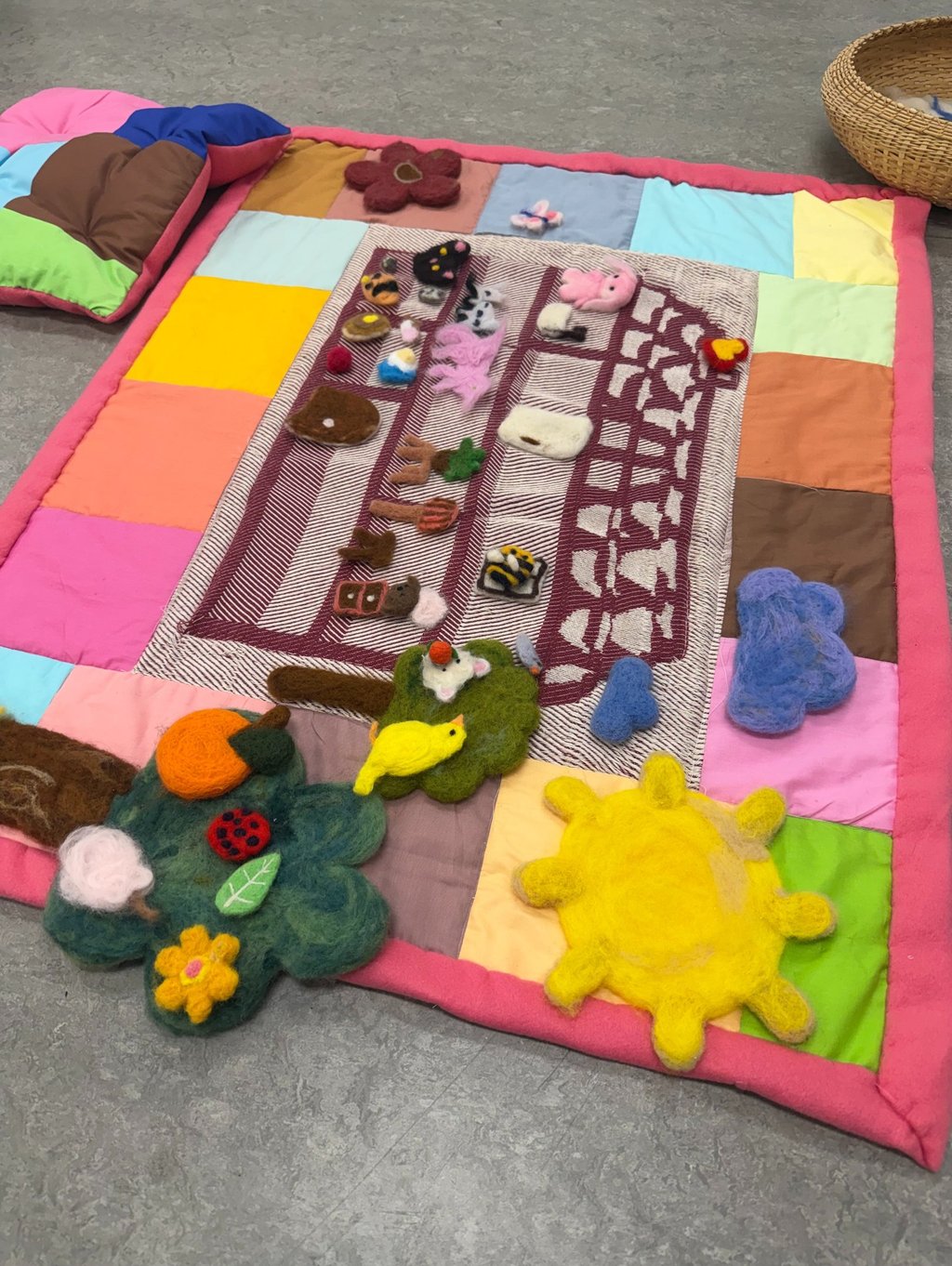
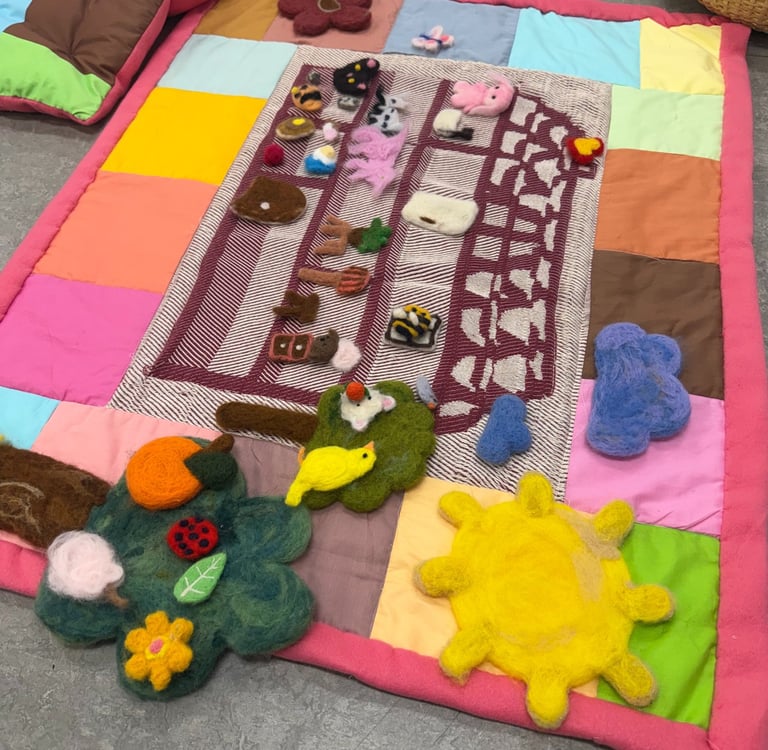
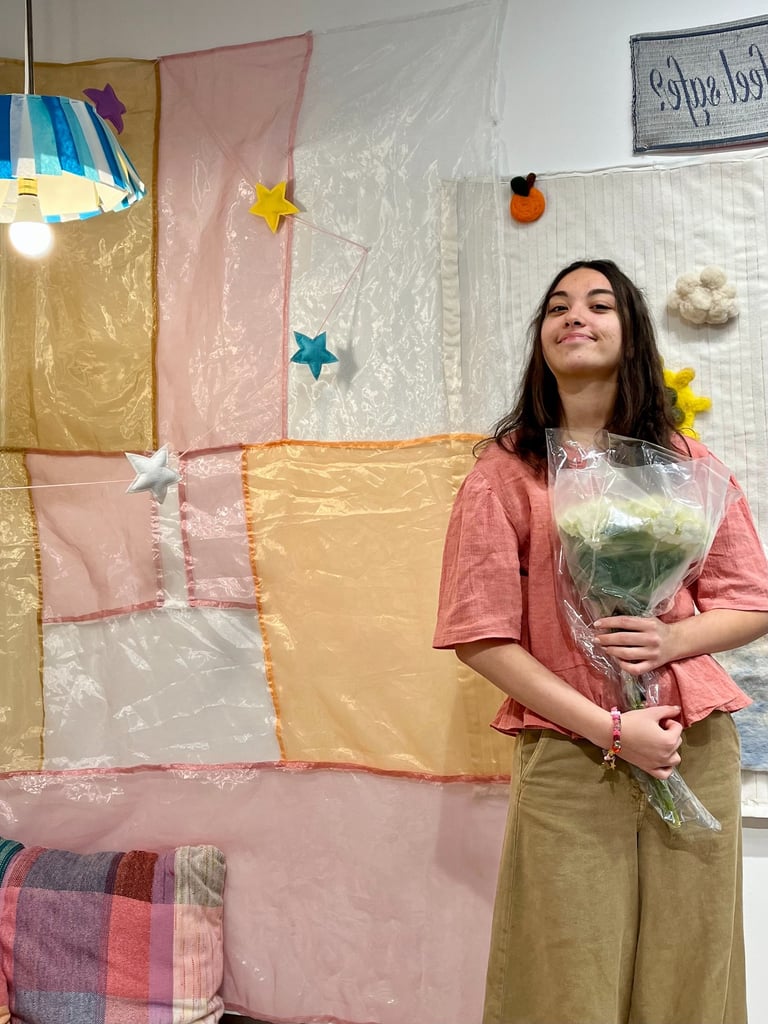
Nehir Uslu is a Turkey-born and raised, Chicago-based artist, illustrator, and mental health advocate currently completing her BFA at the School of the Art Institute of Chicago. Working primarily with fiber, weaving, and soft sculpture, her practice explores how texture, touch, and material engagement can support care, grounding, and emotional presence. Her work often takes the form of interactive installations and tactile objects that invite reflection, rest, and participation.
Grounded in research around sensory experience and psychological well-being, Nehir creates environments and objects that function as vessels for exploring emotion, vulnerability, and healing. Alongside her studio practice, she is preparing to pursue a degree in Social Work, intending to work in mental health settings that integrate direct support, advocacy, and community care. Through both fiber arts and illustration, she bridges creative practice and mental health advocacy, using visual language to foster dialogue, belonging, and collective resilience.
© 2026. All rights reserved.

Viewing Hours by Appointment Only
Open First Friday of each month
(312) 690-9634
2623 W Chicago Ave, Chicago, IL
Viewing Hours by Appointment Only
Open Fridays 5-8pm
info@artcitychi.com
(312) 690-9634
1400 N Halsted St, Chicago, IL