
Carol Schrader:
The Politics of Art, Joy, and Whimsy
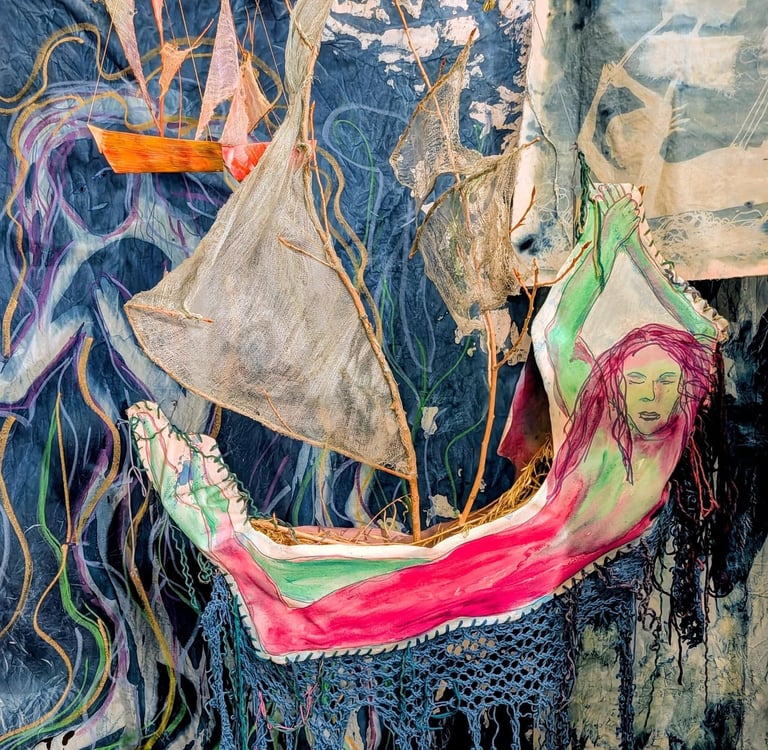
Carol Schrader’s Rising Waters, Mythical Ships invites viewers into a lush, layered world where mythology, memory, and contemporary life drift together on vibrant seas. Opening on June 12, 2026 at Art City, the artist combines cyanotype, stitching, painting, and fiber-based sculpture to build immersive spaces charged with ritual, presence, and transformation.
Here, NEW Gallery joins Carol in conversation about her artistic practice and MIAR exhibition.
NEW GALLERY: Tell me about your art practice. What brought you to what we'll see in Rising Waters, Mythical Ships?
CAROL SCHRADER: I have been an artist my whole life, but my career has been very diverse. I have a degree in political science and spent a lot of time in DC working in government. But, art was always calling me.
I transitioned into managing nonprofits, including some art and art adjacent nonprofits. I ran a social justice circus here in Santa Fe, which was a fabulous experience. At a certain point, I realized I have all these skills that support other people's artistic practice and I wanted to see if I could use them to support my own.
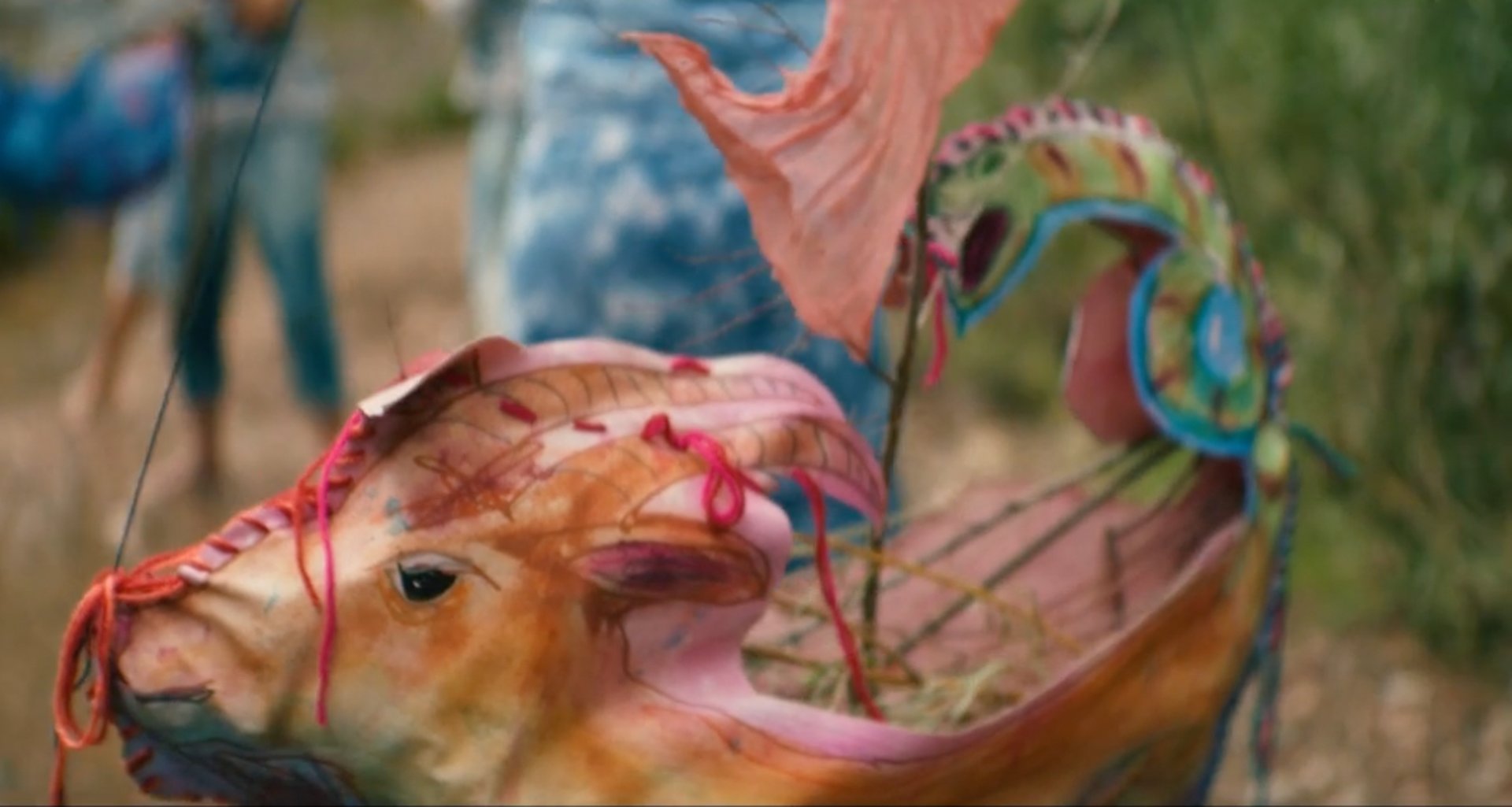
NG: You just mentioned the social justice circus, and I’ve seen the Mythical ships ritual journey to water video you produced as part of your work, a river-based performance with the pieces in the Art City show.
Are there some performance aspects or interactive, immersive portions of the MIAR show visitors can expect to see?
CS: It is definitely immersive. My natural drive is to create immersive spaces. Immersive and maximalist art is really my happy place—creating environments and being able to give people experiences.
I sometimes refer to myself as a collective ritual artist, because I do very much want to bring people together. I have a teaching background, so I'm always wanting to include other people in the artistic experience and have them make their own art as part of it.
NG: In addition to this immersive experience, what can visitors expect to see in terms of the show’s content and themes?
CS: My work is very elemental. I tend to work with fire and water, in part because I grew up on the water and have spent a lot of time on boats and ships. One way this shows up is in cyanotypes, which is an alchemical process working with the fire of the sun and water to set the image. Then there are also a lot of ships, which also brings in the water element.
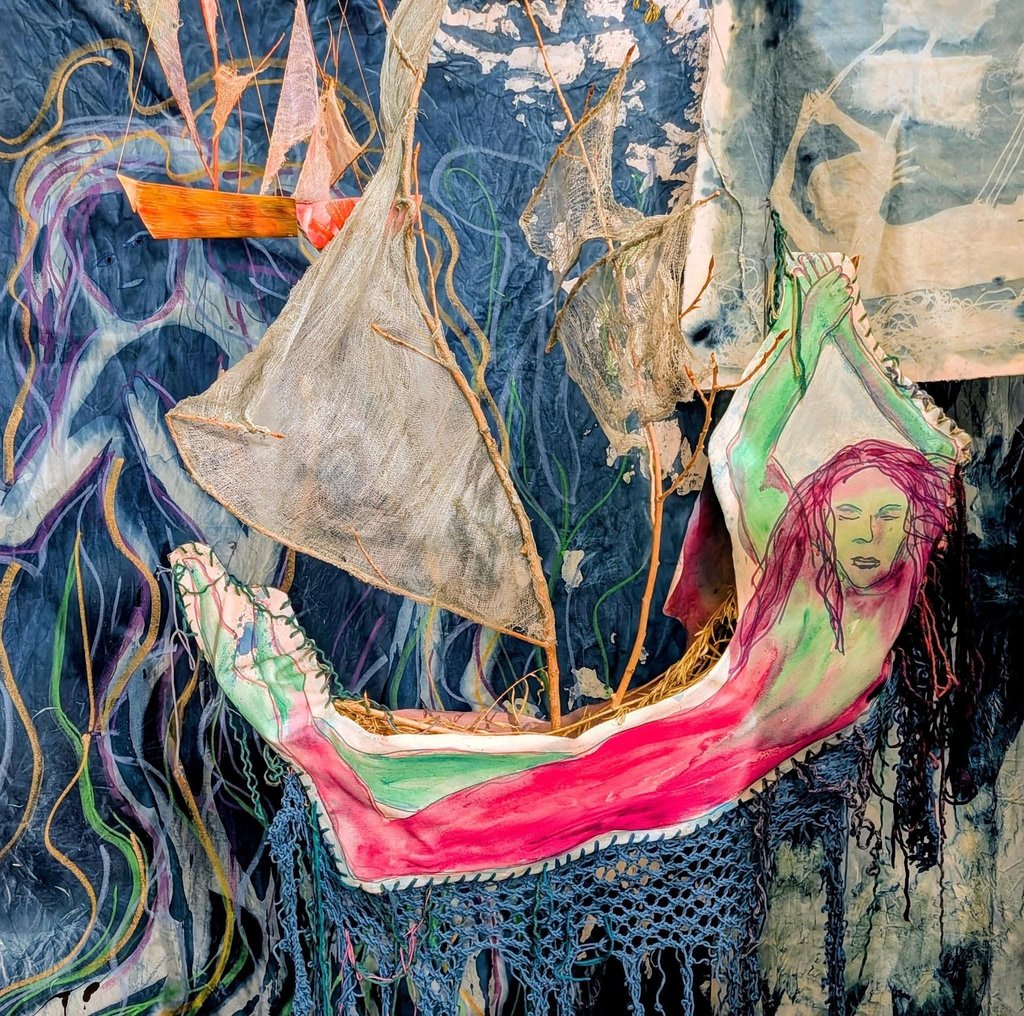
The large scale ships in the show came out of my time at the 2024 Venice Biennale when I was part of Jeffrey Gibson's educator team at the American pavilion. I became so passionate about Venice, because it is like a dreamscape for me, with buildings sinking into the water, surrounded by all these ships.
While in Venice, I started drawing these beautiful, ancient, sinking buildings as objects in the gondolas as a whimsical way to consider how we can save these architectural treasures.
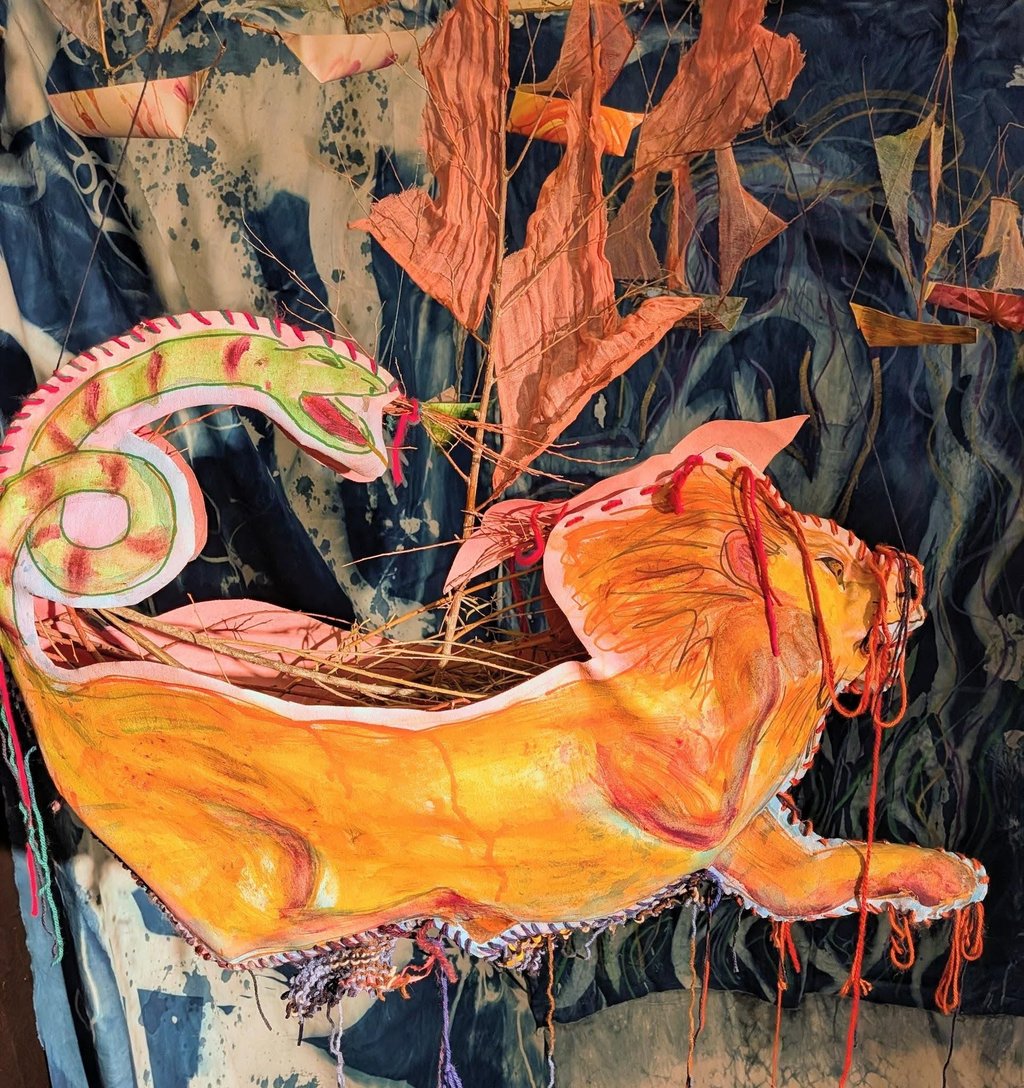
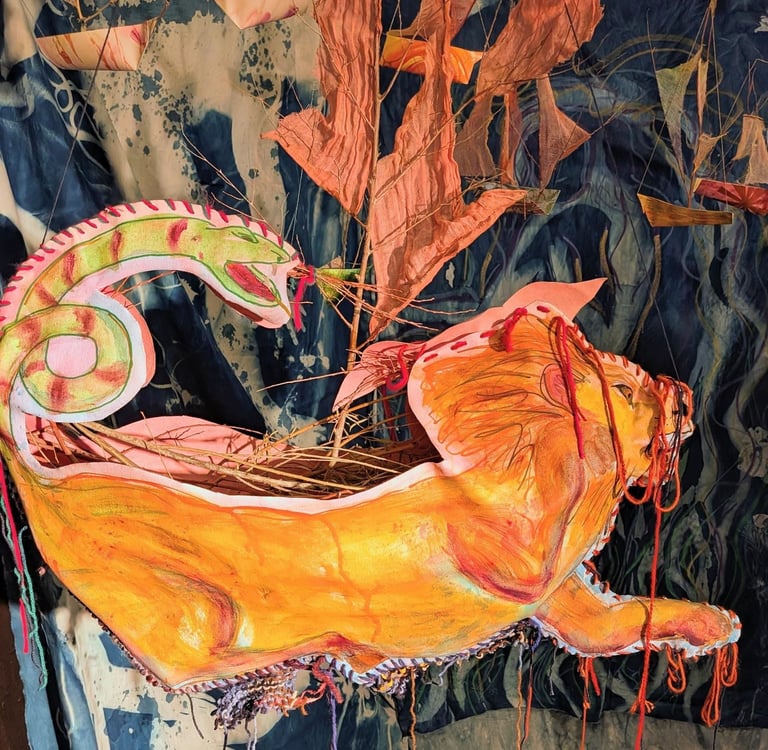
The chimera that's in the show is one of the emblems of Venice. The chimera is part goat, part lion, and part snake, and so he came out of that, just that kind of playfulness of being there. All of this grew out of the sketches I made while in Venice.
And then the smaller ships you see in the show were actually made a couple of years before, using a variety of local plants to dye the gauze sails. I live right on the Santa Fe River and all of these ships reference the river with the materials that they're made of: willow, chamisa, cottonwood, elm.
NG: You alluded to the idea of myth and folklore a little bit when you described your personal history with water and ships, plus the use of the chimera figure. Does your work often and intentionally reference traditional folklore mythology?
CS: Absolutely. The chimera was something you can see all over Venice when visiting, so that is how it manifested in my work, but I often reference other mythological figures.
I have been making this character that I call my muse, and while working with her I realized that she’s actually Hydra, which was sister to Chimera. Chimera, Sphinx, and Hydra were female guardians and the children of Echidna and Typhoon. With Hydra in particular, she’s a Medusa-like figure. Hercules tried to cut off her heads, and every time he cut off a head, she would grow two more. I see that story as a commentary on women's voices and creative expression—that the more it is silenced, the stronger it comes back.
So, yes, I do work a lot with mythology. I think these stories are really deep in us and in our social narratives, showing up in different cultures with different names and different presentations.
NG: Considering your political science background, experience working in government, and the thematic nod to climate change via explorations of fire, water, and the sinking buildings of Venice, is this exhibition an extension of your experience using art as a political tool?
CS: I think that inevitably everything I make has a political side to it. My art is generally pretty joyous, powerful, and exuberant in a maximalist way, but our art is an expression of us and if political discourse is an aspect of us, it’s going to come through.
What is most political to me about art is just the idea that people should even make it. In our culture, we have been told not to make things and that instead we need to be consumers and buy things to keep ourselves happy. We buy our music, we buy our clothes, we buy our food, we buy all these things that people used to expend their creative energy making. I'm very passionate about empowering people to get in touch with their creativity. To me, the act of making art in and of itself is inherently political, because it's reclaiming that part of our humanity.
"What is most political to me about art is just the idea that people should even make it. In our culture, we have been told not to make things and that instead we need to be consumers and buy things to keep ourselves happy... I'm very passionate about empowering people to get in touch with their creativity. To me, the act of making art in and of itself is inherently political, because it's reclaiming that part of our humanity."
NG: What can visitors expect to see, feel, or think about when viewing Rising Waters, Mythical Ships?
CS: I hope they feel joy and the whimsical, playful, childlike aspect of it. I hope they feel the calm of the water and find inspiration to play. I hope everyone goes home and wants to make something themselves.
I'm not a perfectionist. I find that people often think art has to be perfect and precise. But, I like to work in a very loose way that invites other people to experiment and play as well.
NG: What does this MIAR show mean to you and for your artistic practice?
CS: This show aligns with the conclusion of my MFA thesis at SAIC. My thesis has four chapters: Acequia Madre, Body of Water, Water Walking, Mythical Ships. The first two will be represented in my thesis show, and the latter in MIAR.
It's really meaningful to be able to show these two bodies of work that make up my entire thesis. I hope that anyone viewing the show at MIAR will be inspired to come view the second show at SAIC in July.
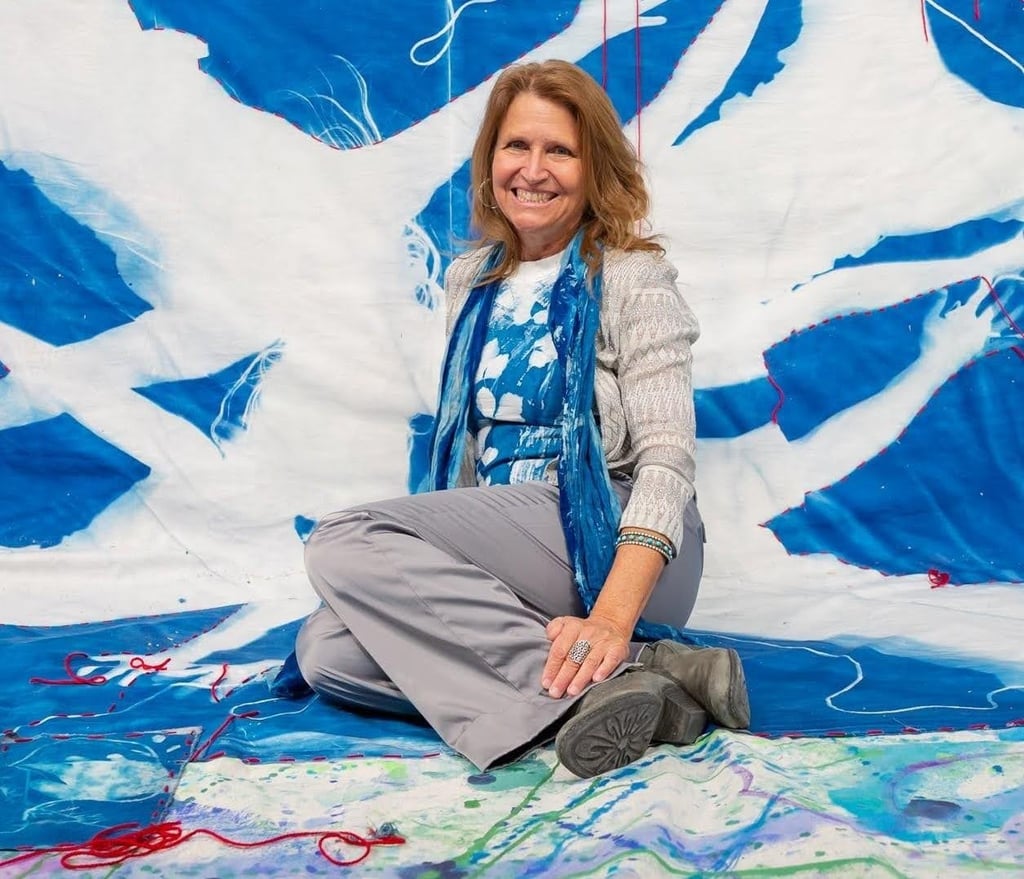
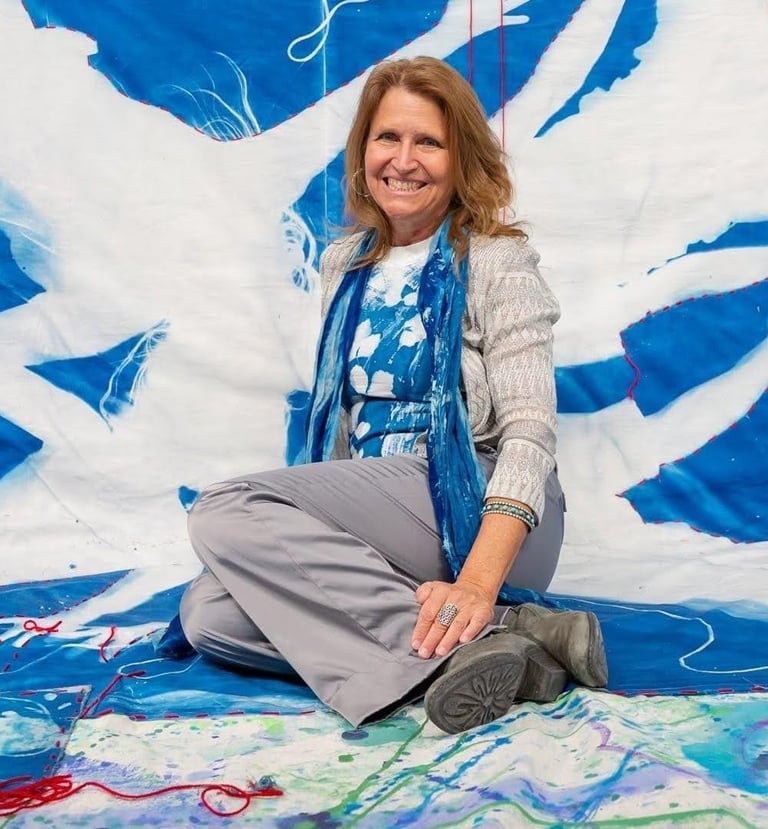
Carol Schrader is a member of Jeffrey Gibson’s Biennale educator team and the Abstract Picnic Arts Collective in Santa Fe, NM. She has an MFA from the School of the Art Institute of Chicago (exp 2026), and a BA in Government from Harvard. Art brings together her passions for creating community and connecting to place.
Images courtesy of the artist.
Artist Conversation
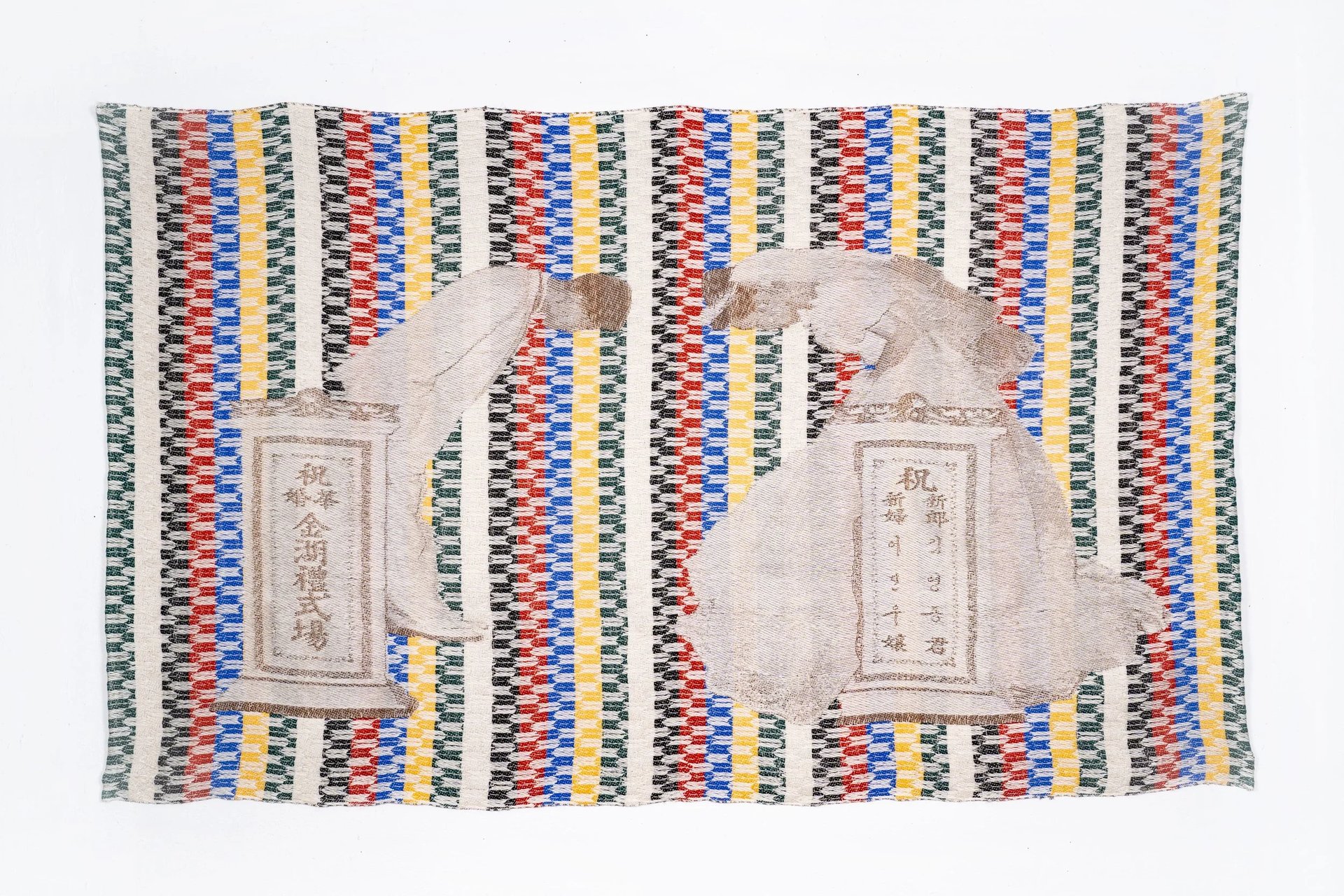
Cherin Kim: Exploring displacement, identity, and memory through imagery
© 2026. All rights reserved.

Viewing Hours by Appointment Only
Open First Friday of each month
(312) 690-9634
2623 W Chicago Ave, Chicago, IL
Viewing Hours by Appointment Only
Open Fridays 5-8pm
info@artcitychi.com
(312) 690-9634
1400 N Halsted St, Chicago, IL