Cherin Kim: Exploring displacement, identity, and memory through imagery
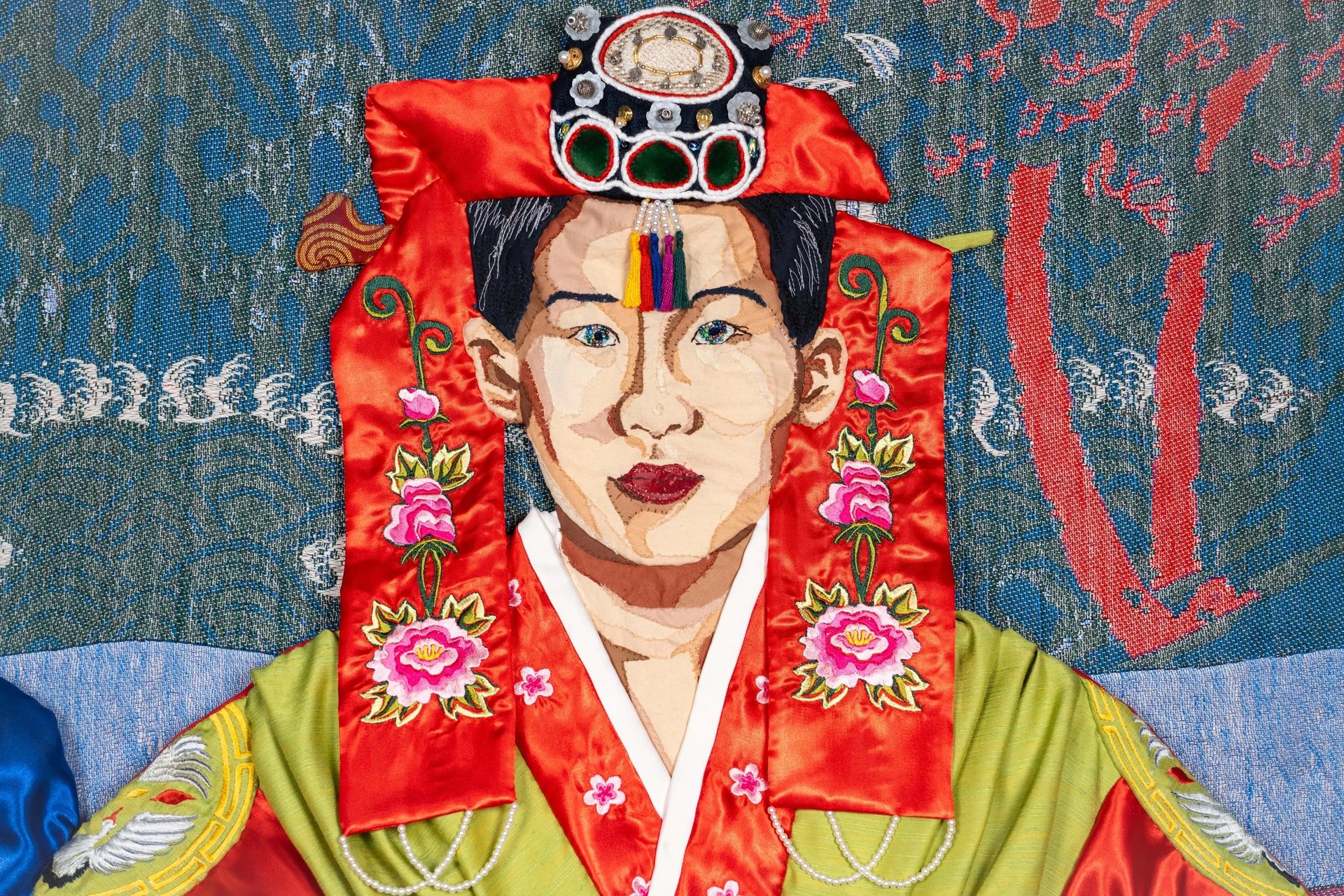
Cherin Kim translates historical documents into textile portraiture to explore how archived images become a vessel for identity construction. Highlighting the memories of displaced communities, Kim speaks to the inherited narratives of “third culture” individuals and explores the intersection of intimate personal memory with public cultural identities.
Here, NEW Gallery joins the artist in conversation about her upcoming solo show in the MIAR gallery, Union of Two [이성지합], on view May 8 – June 6, 2026 at Art City.
NEW GALLERY: Thank you so much for taking time to chat with us about your work! I was wondering if you could begin by describing your artistic practice?
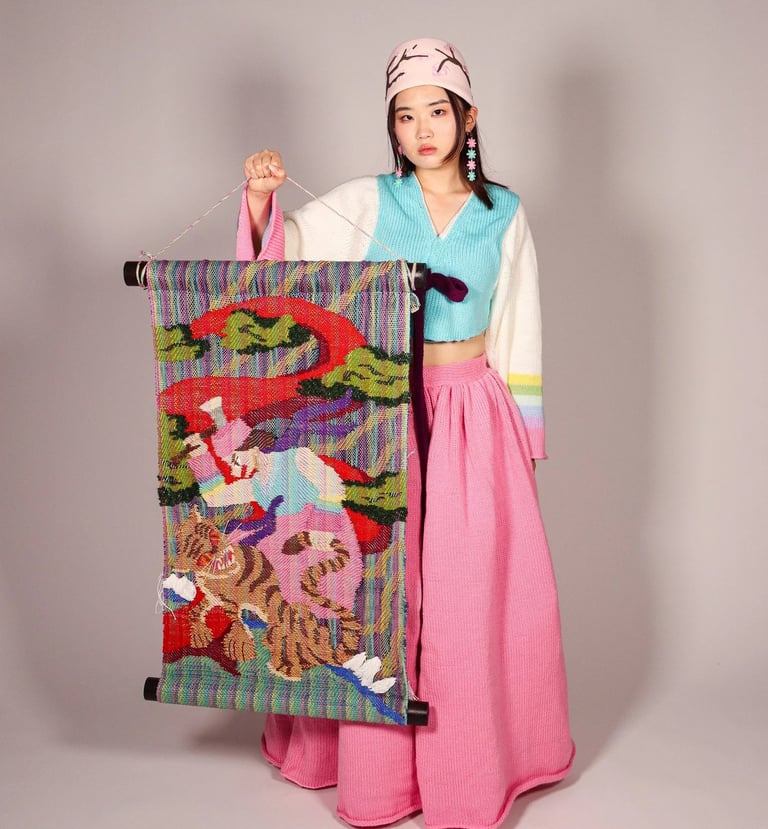
CHERIN KIM: I originally started as a painter, actually. But a couple of years ago I learned about fiber art and different textile techniques, and for me, that really clicked. Now my artistic practice involves making textile portraits that explore ideas of home from a diasporic perspective.
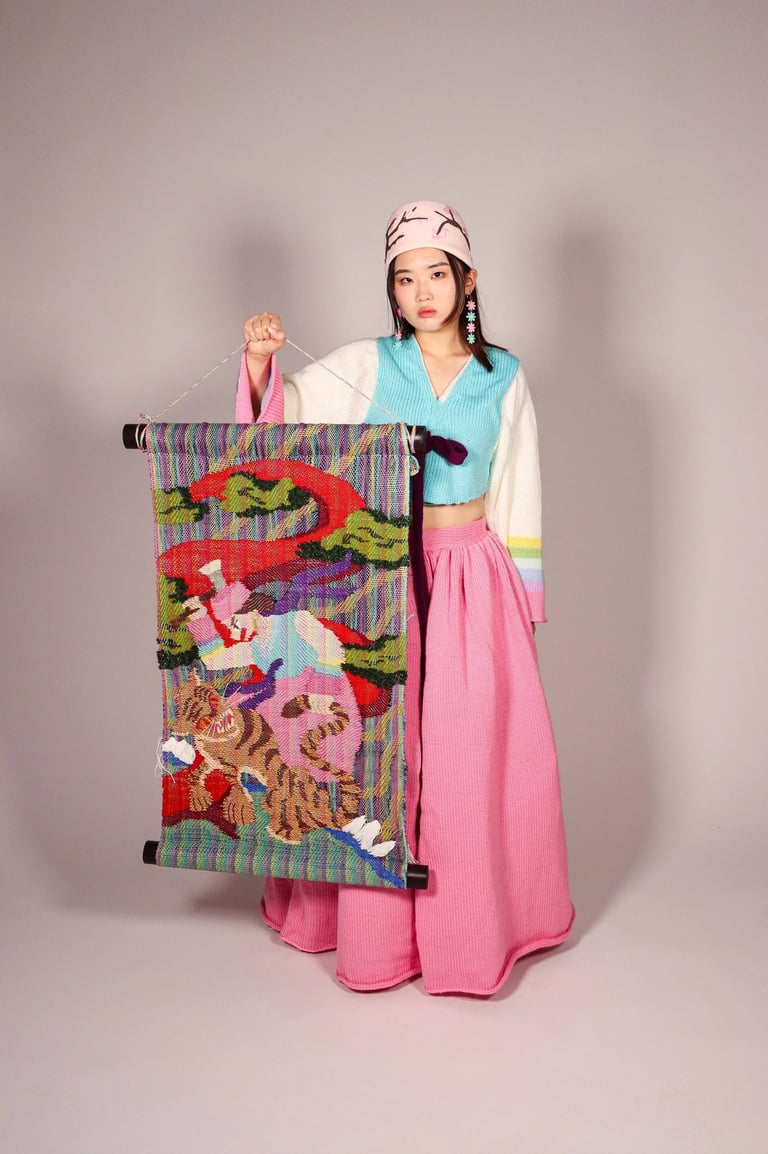
For immigrants and culturally displaced folks, our understanding of our own heritage is often limited to archived images or inherited narratives. With this in mind, I started to recreate journalistic photos, family portraits, and traditional folk art as a way to recollect on these histories.
NG: When you're reflecting on the historical artifacts alongside the contemporary realities of immigrant lives, do you find that your personal memories are intersecting with these public histories in the work?
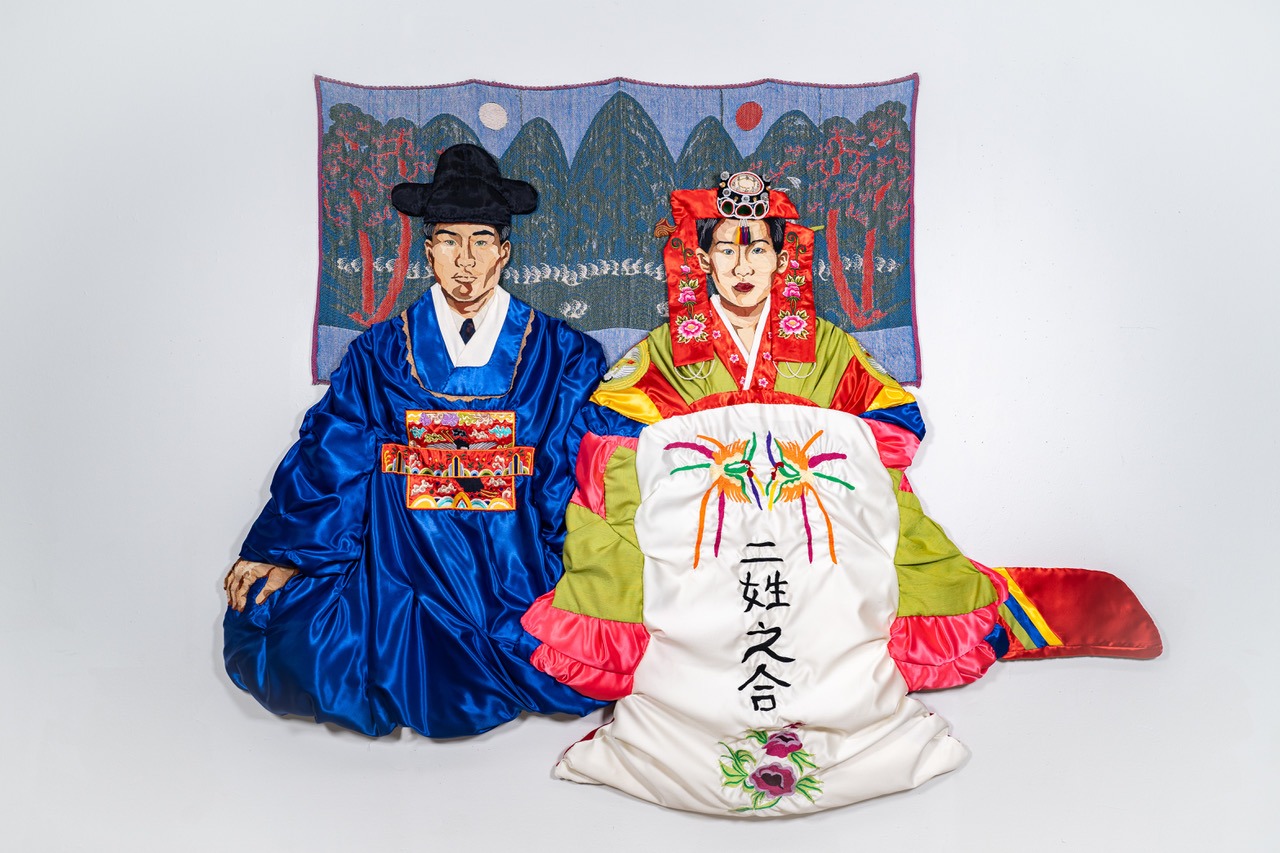
CK: There is definitely an intersection of the two that I'm exploring through my work. I work with historical documents and cultural symbols, but also with personal family photographs. Personal images are actually the main foundation for this MIAR show: Union of Two [이성지합].
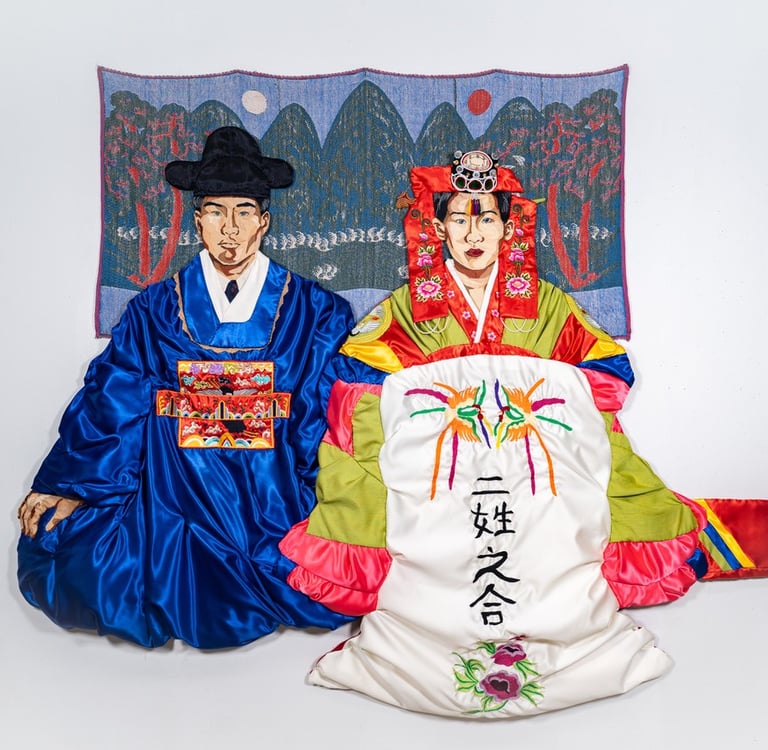
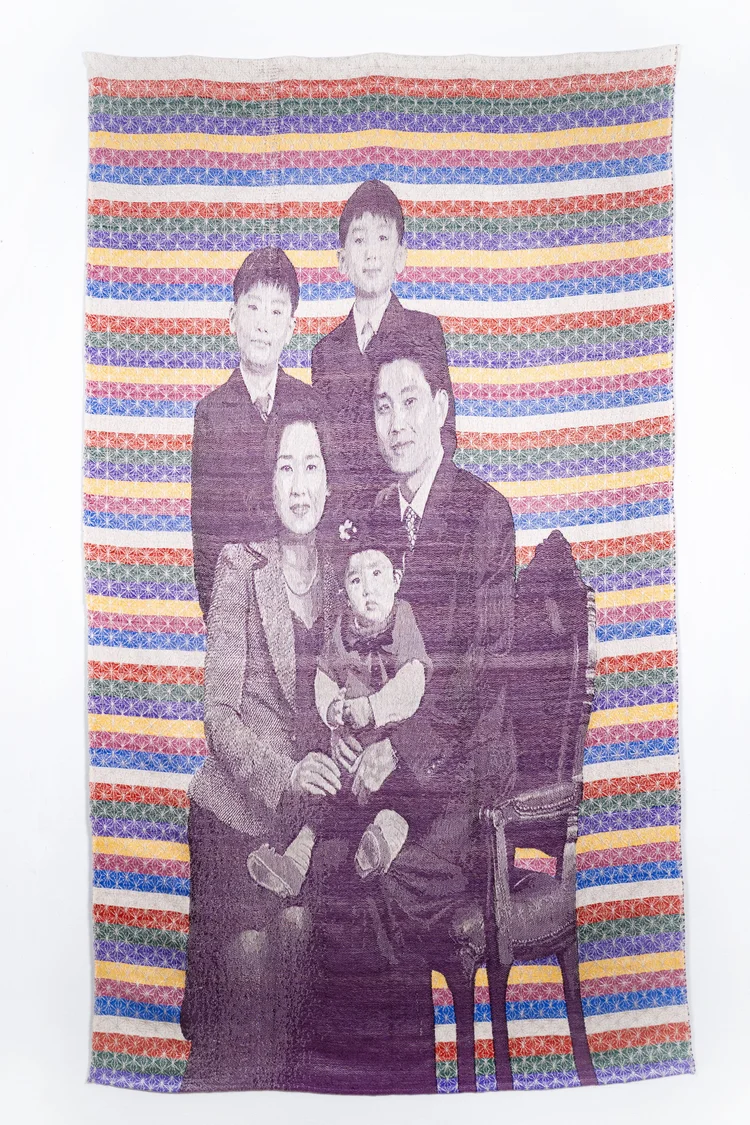
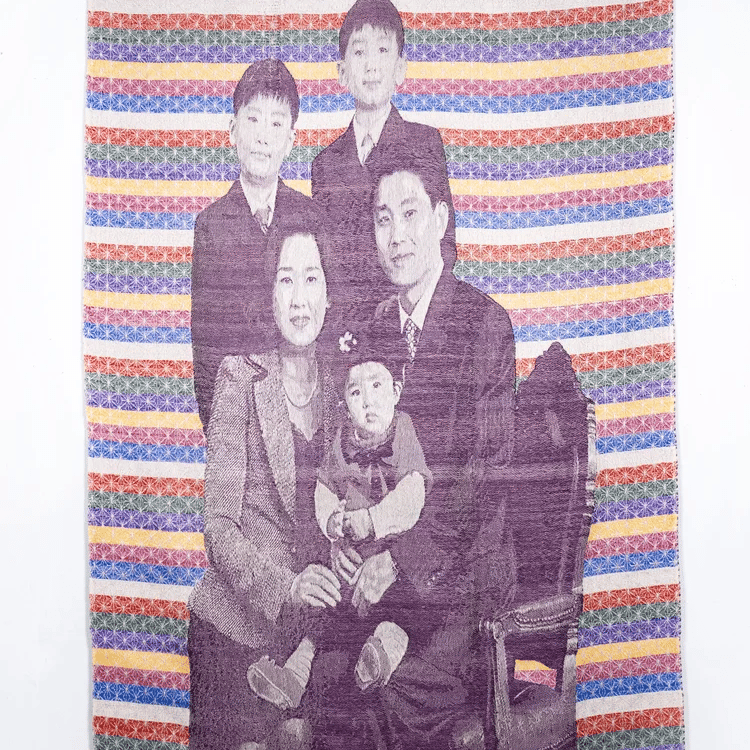
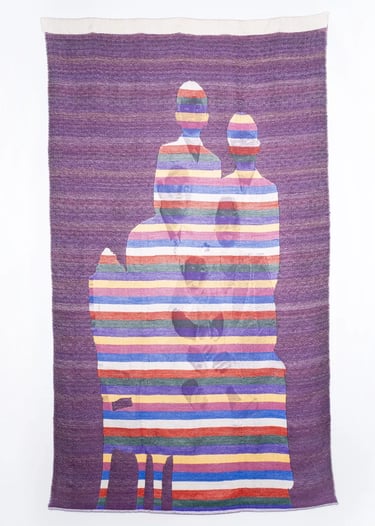
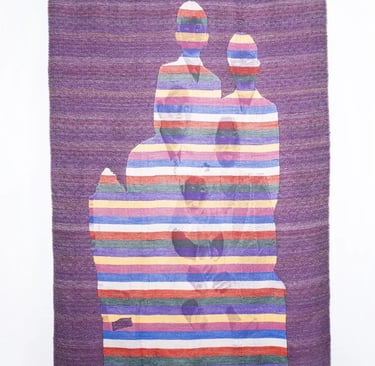
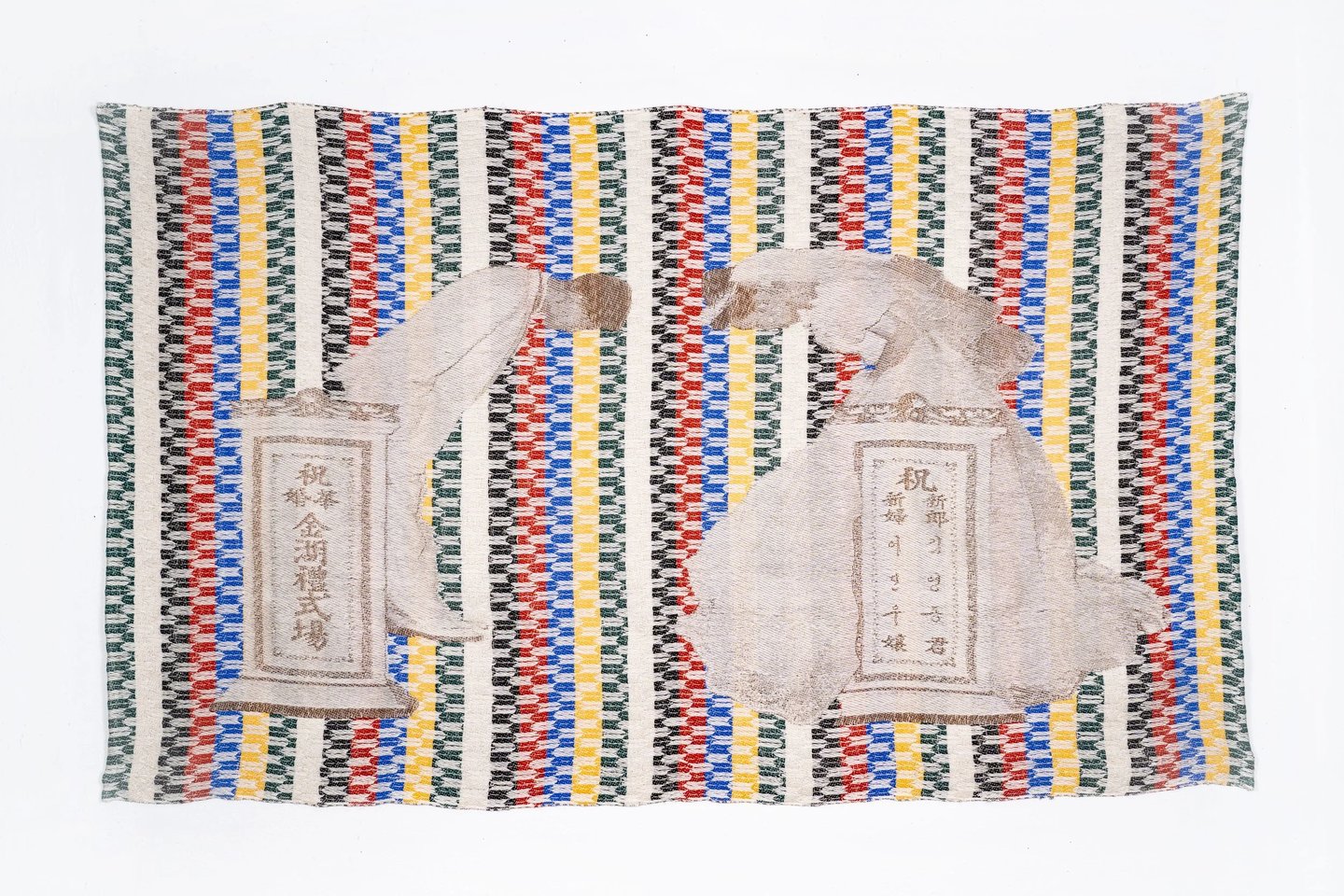
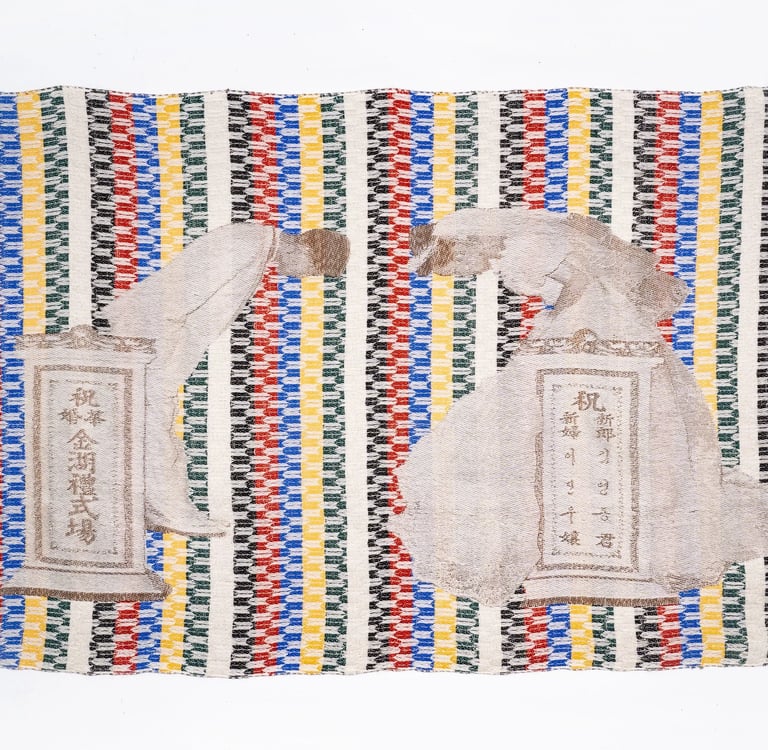
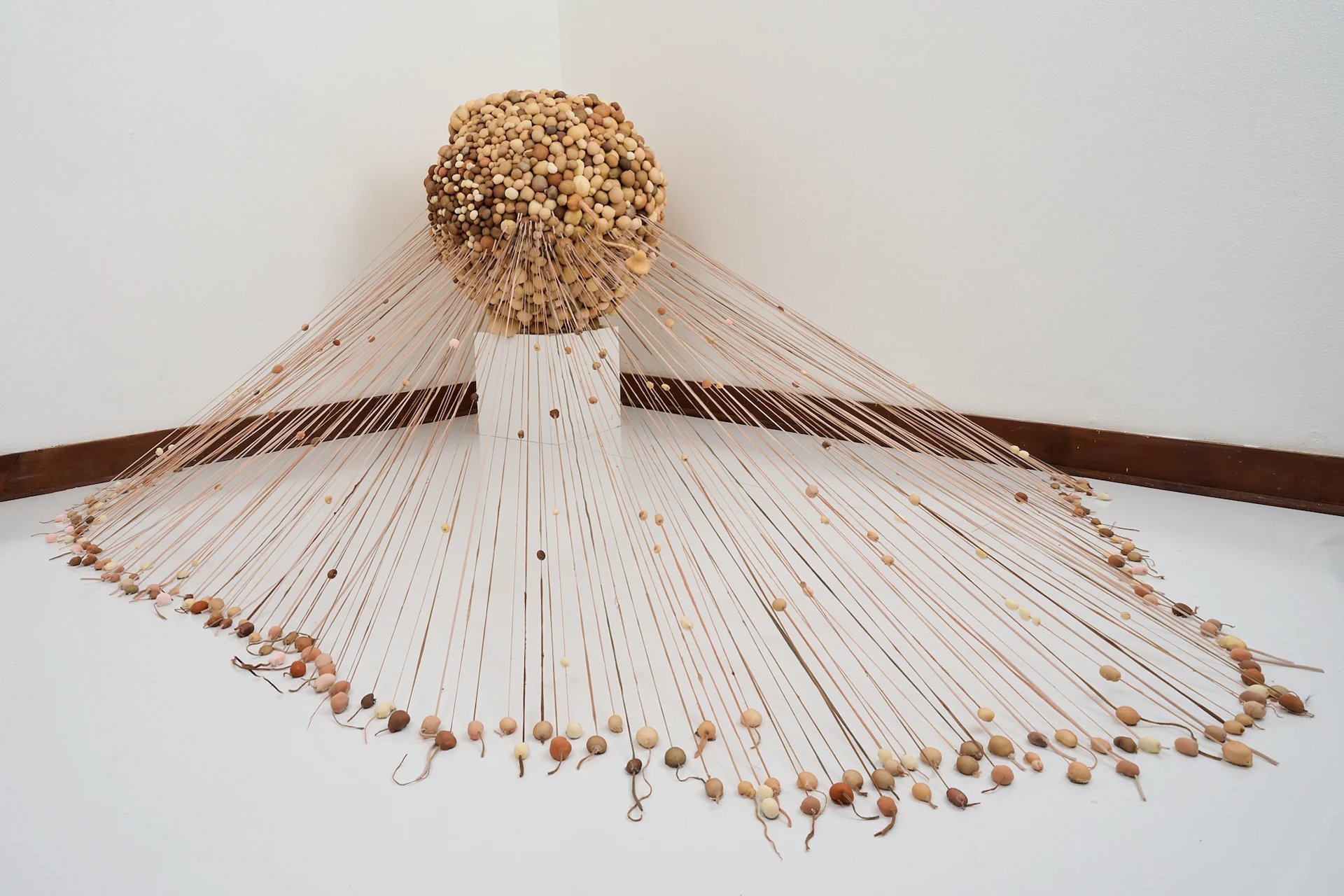
At the center of the show is a portrait of my parents during their pre-wedding ceremony. This image inspired the rest of the works in the series, which includes woven textiles I created on digital Jacquard looms. Using the digital jacquard technology, I’ve been able to overlay images of my parents at different stages of their relationships in combination with Japanese textile patterns and the colored striping you often find in Korean garment textiles.
NG: How did you come to mixing both the Japanese and Korean textile visual references in your work?
CK: I've been working on ways to translate or reveal cultural background without it having to be so literal. I thought that a good way to do that would be by incorporating these traditional motifs, patterns, and symbols that we see across historical textiles.
Because I'm from a Korean immigrant family born and raised in Japan, I wanted to be able to reveal both sides of my heritage. For the show, I selected patterns that have specific meanings in regards to marriage or children, and layered them with these distinct cultural textiles.
NG: Is there a particular reason you’ve come to explore the topic of marriage for the exhibition?
CK: At the time that I was working on these pieces, there were a lot of marriages and weddings happening around me, including my brothers’. As I was looking through their wedding photos, it made me want to look back at my parents' wedding photos, too.
Something that I found across these photos was this very posed quality, because a lot of these are taken in a studio setting. Even though they're in different years and in different places, they kind of look the same with the same background, same poses. It made me think about how photography, and specifically this format of family photos captures this image of an idealized family, but in the process, it also reinforces and recreates images of gendered, domestic roles — prescribed visualizations of what's expected or standard.
NG: I'm curious, do you have any hopes for what visitors will think about or feel when viewing the show?
CK: My hope for people visiting the show is that it'll give them an opportunity to reflect on their own histories or their relationships with their families. Images of the past hold a lot of information and meaning, especially photographs that were taken back when access to photography was much more limited than it is now. Today, we have such quick access to a camera and information. Images and products are always swimming across our screens. I'm hoping that through this exhibition, people can take a moment to slow down and really appreciate what photography and historical archives have to offer.
There are a lot of stories in the world to experience once we begin to pay a bit closer attention.
"Images of the past hold a lot of information and meaning... Today, we have such quick access to a camera and information. Images and products are always swimming across our screens. I'm hoping that through this exhibition, people can take a moment to slow down and really appreciate what photography and historical archives have to offer."
"There are a lot of stories in the world to experience once we begin to pay a bit closer attention."
NG: That really resonates with me. I think about my own family photos that are almost like sacred objects because there are fewer of them from a time when film was limited and costly. How we capture and share our own stories has changed so much in recent times. This exhibition feels like a way to examine this reality and question how we capture, display, and hold onto our lives now.
We started this conversation series as a way to extend the life of our MIAR exhibitions beyond the show dates and to really center the voices of artists across our platforms. I wonder, how has this opportunity made an impact in your practice or career?
CK: This opportunity in particular offers me a chance to compile a more comprehensive view of my artistic practice. When you show as part of a group, there is a lot less control in terms of how the work is presented or the narratives that they fall within.
The MIAR program allows me to shape my own specific narrative and curate works to fit into that.
"This opportunity offers me a chance to compile a more comprehensive view of my artistic practice... The MIAR program allows me to shape my own specific narrative and curate works to fit into that."
Cherin Kim (b. Kobe, Japan) is a fiber artist based in Chicago, IL. Her textile portraits investigate how diasporic identities are constructed through inherited narratives and archived images. Kim is attending the School of the Art Institute of Chicago to complete her BFA in Spring 2026.
Images courtesy of the artist.
© 2026. All rights reserved.

Viewing Hours by Appointment Only
Open First Friday of each month
(312) 690-9634
2623 W Chicago Ave, Chicago, IL
Viewing Hours by Appointment Only
Open Fridays 5-8pm
info@artcitychi.com
(312) 690-9634
1400 N Halsted St, Chicago, IL